A low-slung silhouette, a 1,200 cm³ twin-cylinder engine, and unmistakably British elegance.
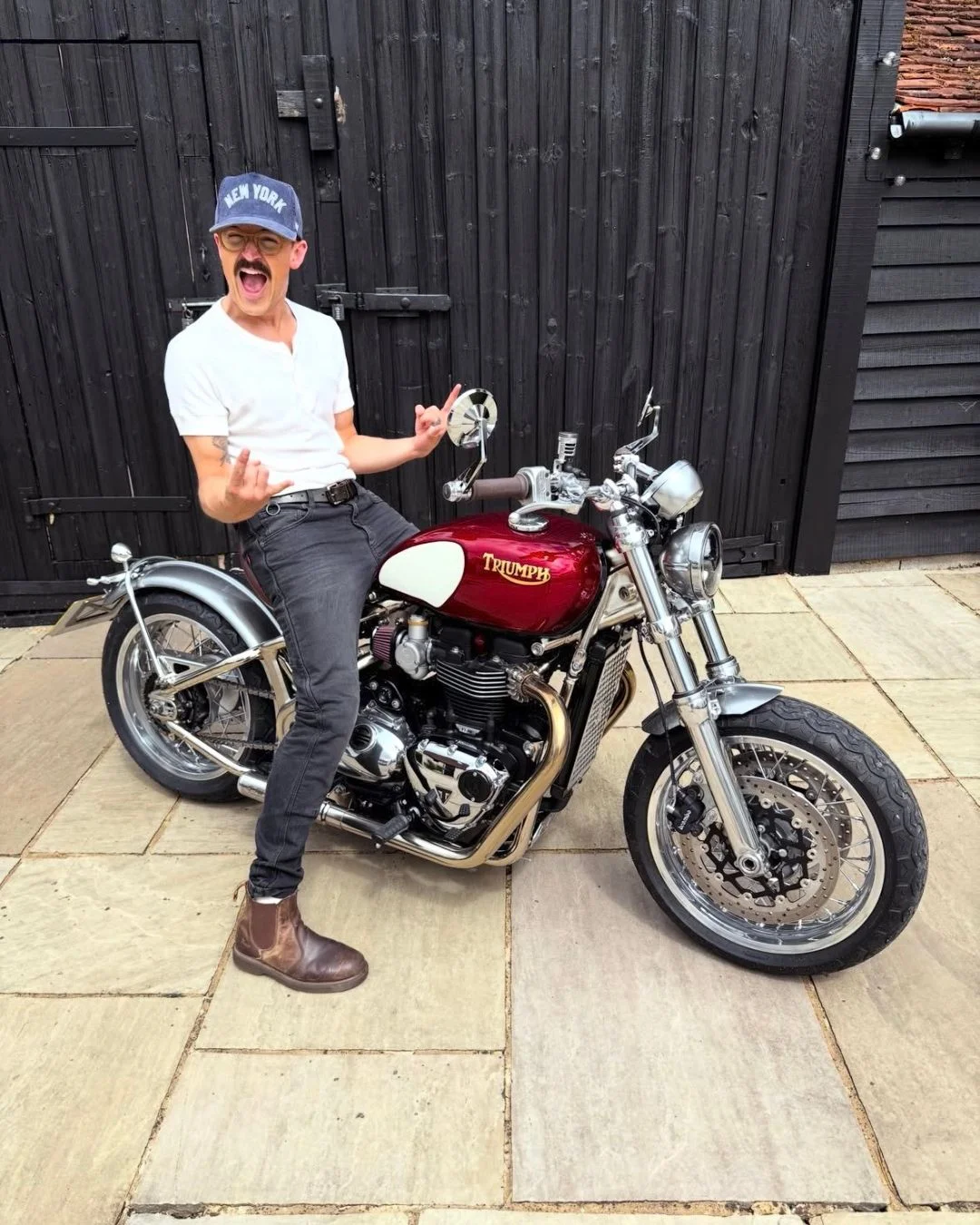
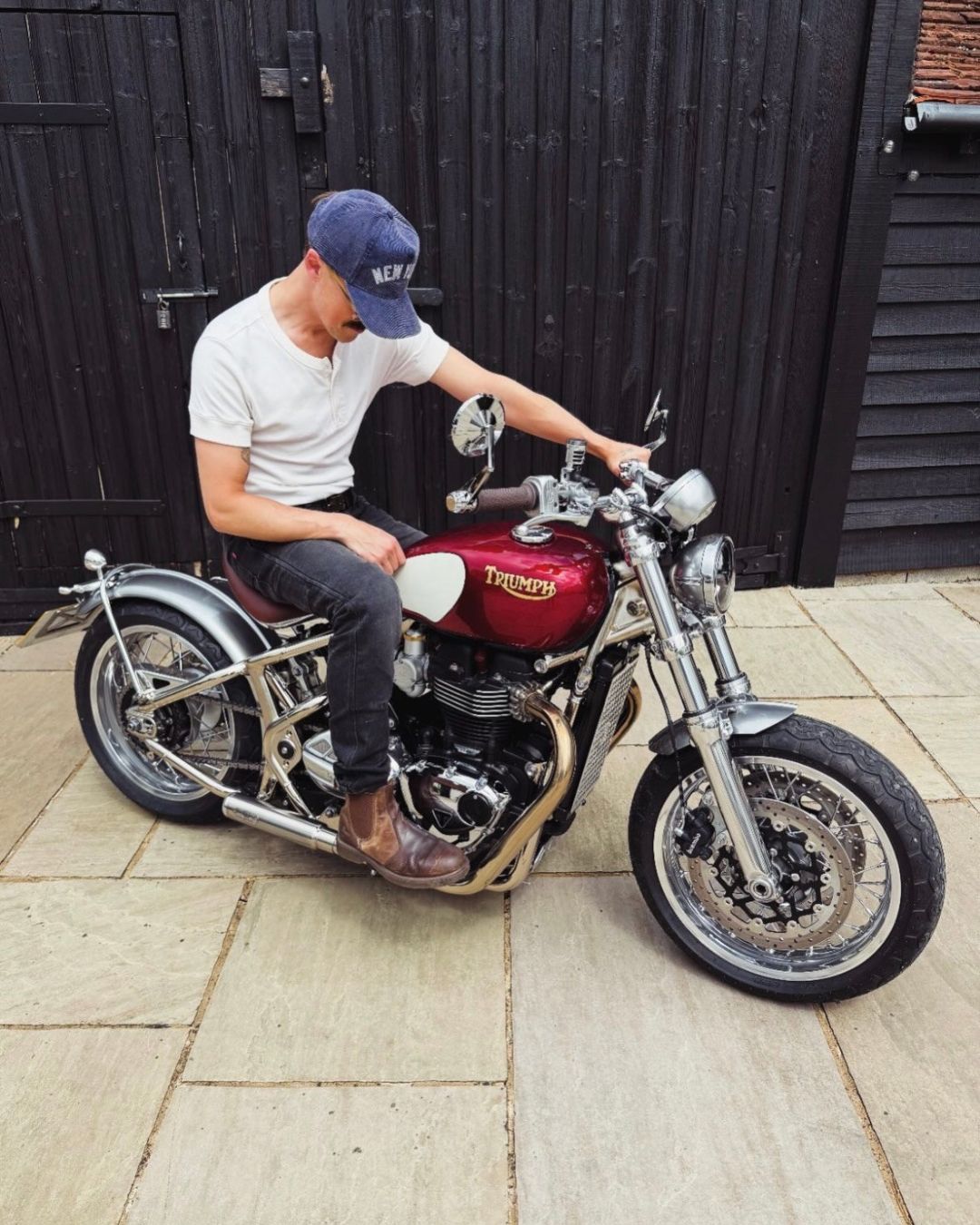
For Tom Fletcher, musician, author, and member of the band McFly, FCR Original presents a new interpretation of the Triumph Bobber 1200. A nickel-plated frame, a deep red fuel tank, cream-colored side panels, brown leather, and polished aluminum: a custom build conceived as a cohesive whole in our workshop in Chauvigny. Here’s how we envisioned it—and what it might inspire for your own project.
What Is a Bobber Motorcycle?
The Bobber is a style of motorcycle customization that originated in the United States, based on minimalism. The principle: subtract rather than add. Shortened fenders, a solo seat, a low profile, exposed mechanics, and no embellishments. The term comes from “bob-job,” the practice of cutting the fenders to lighten the bike. Even today, a Bobber motorcycle is first and foremost recognizable by its proportions.
So, before being a model, the Bobber is a philosophy.
Its origins can be traced back to American owners who customized their motorcycles by removing everything they considered unnecessary. The goal: lighter, simpler, and visually cleaner machines.
Unlike other trends in motorcycle customization, the Bobber doesn’t necessarily seek to radically alter the bike’s geometry. Its character comes from the reduction and balance of its proportions.
The visual elements of the Bobber style:
- No unnecessary decorative elements
- Short fenders, sometimes omitted
- Solo seat, set low
- Exposed mechanics, never concealed
- A visually streamlined rear end
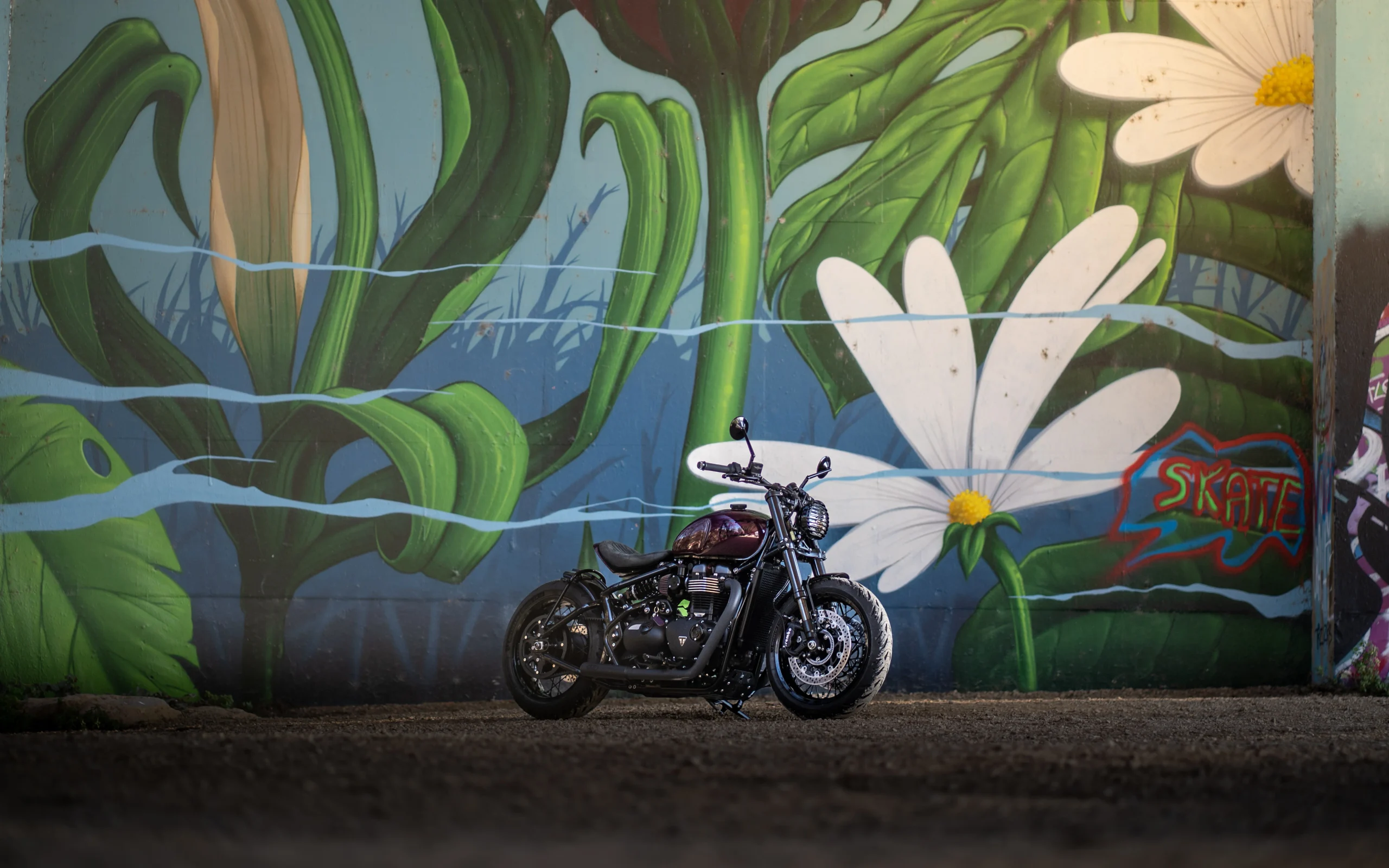
How Triumph Reimagines the Bobber with the Bonneville Bobber 1200
With the Bonneville Bobber, Triumph brings historic styling cues to a contemporary motorcycle. A solo seat, stripped-down rear end, low riding position, and a design that gives the engine plenty of room: all the hallmarks of the genre are here. At the heart of the machine is the 1,200 cm³ parallel-twin engine from the Bonneville family.
One of the design’s strengths lies in a subtle illusion. The Triumph visually evokes classic rigid-frame architecture while retaining a modern rear suspension.
The result is a modern motorcycle that draws on the aesthetic elements of classic bobbers without sacrificing a contemporary design.
And that is precisely what makes it such an interesting base for preparation.
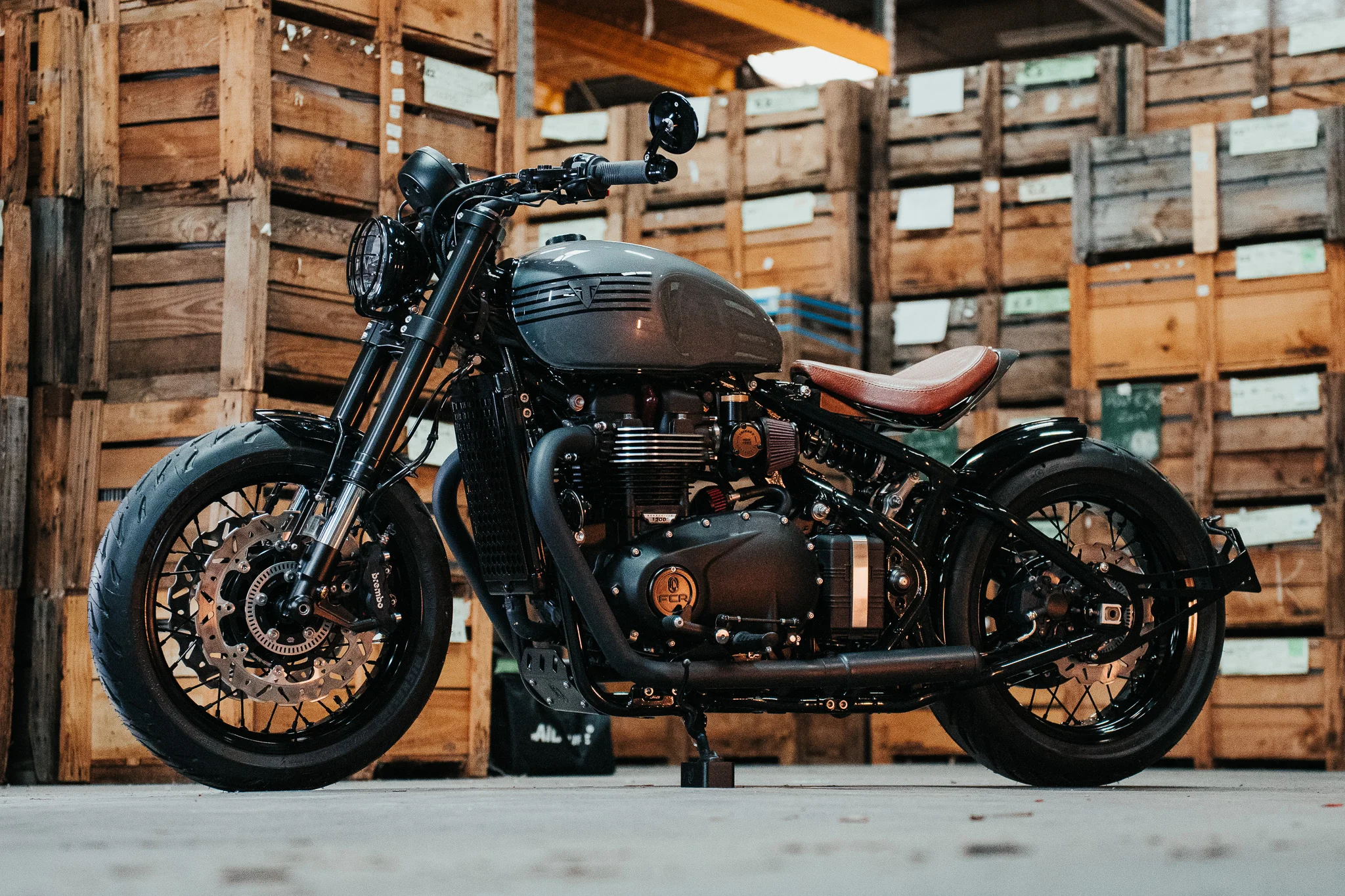
Why the Triumph Bobber Is an Ideal Platform for a Custom Build
The Triumph Bobber offers exactly what we’re looking for when starting a project: a strong design and very few superfluous visual elements. A compact fuel tank, a forward-mounted engine, and a solo seat that creates a sharp break with the rear wheel. Because the original design is already so clean, every modification stands out immediately.
Change the wheels. Shorten a fender. Modify the seat. Rework the exhaust. Or simply change the material.
On this motorcycle, each of these actions changes how the whole is perceived.
That’s also what makes building a bobber so challenging. On such a stripped-down bike, nothing is hidden. A poorly judged proportion stands out immediately.
It was with this in mind that we designed Tom Fletcher’s Triumph Bobber 1200.
The Tom Fletcher Project: Transforming a Bobber Without Altering Its Essence
Our work on this motorcycle boils down to one question: How far can we go in transforming a bobber without making it lose what makes it a bobber?
There are motorcycles with such a strong identity that you definitely shouldn’t try to reinvent them from scratch. The Triumph Bobber 1200 is one of them.
So when this bike arrived in Chauvigny, our goal wasn’t to bury the Bobber under a pile of modifications. Quite the contrary. We wanted to build on its character to create a more exclusive, more refined version, deeply rooted in the FCR Original universe.
Rather than breaking with its roots, we have emphasized its core principles.
The fenders have been shortened. The solo seat remains at the center of the bike’s silhouette. The mechanical components remain largely exposed. The rear end appears lighter, and the peripheral components are kept as unobtrusive as possible.
This deliberately minimalist foundation then allowed us to go much further in terms of colors, materials, and finishes.
British elegance: deep red, cream, and gold
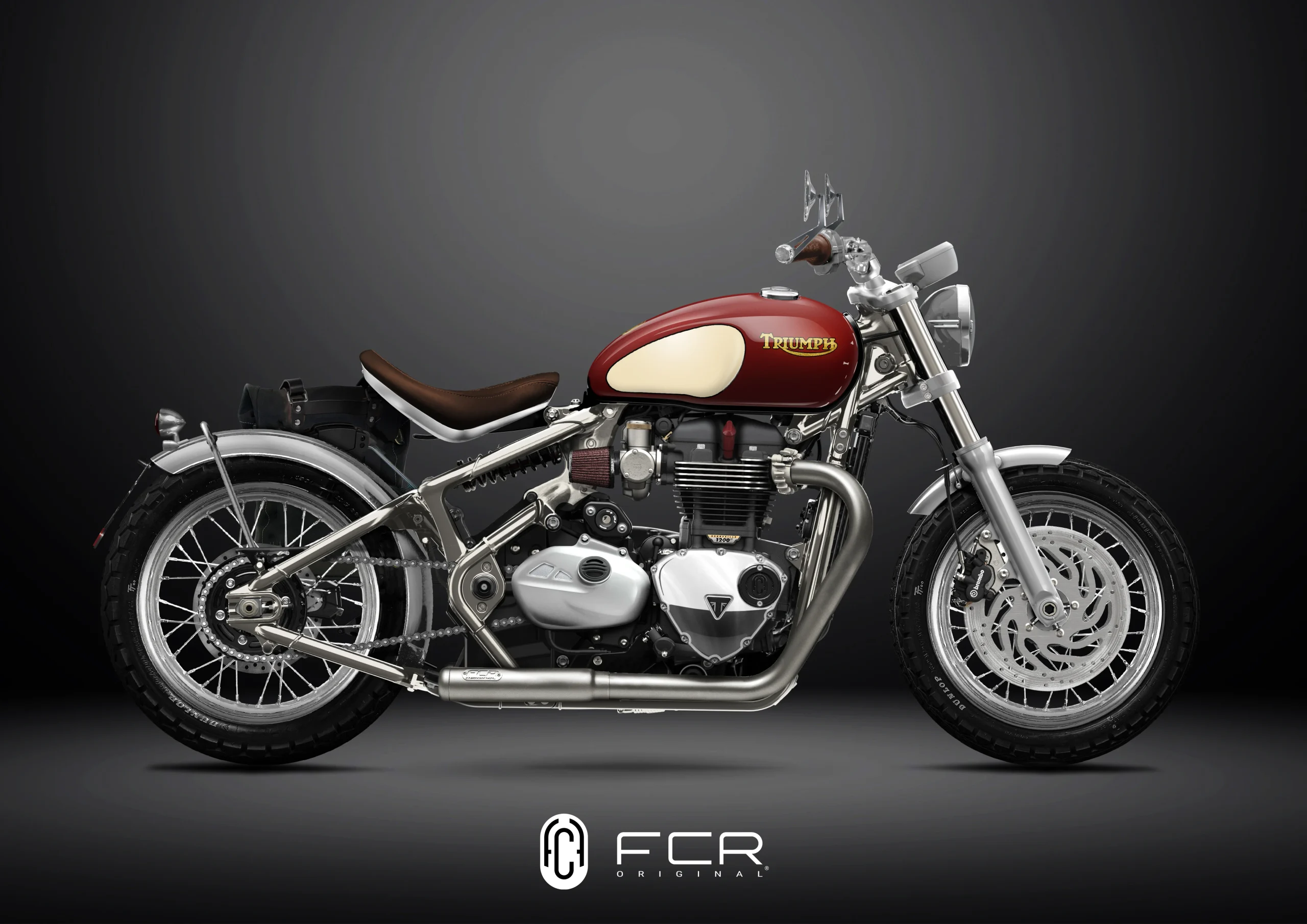
The first thing that catches the eye is the fuel tank. Its deep red hue is paired with cream-colored sides accented by a thin black trim. The Triumph logo features a gold finish, with a discreet “FCR Original” signature. Red, cream, gold, brown leather, chrome, and aluminum: the color palette immediately sets the tone.
We did not seek to break away from the Triumph identity.
We drew on his classic stylistic elements to give them a more personal interpretation.
The result exudes British elegance, while gradually revealing the distinctive elements of our world.
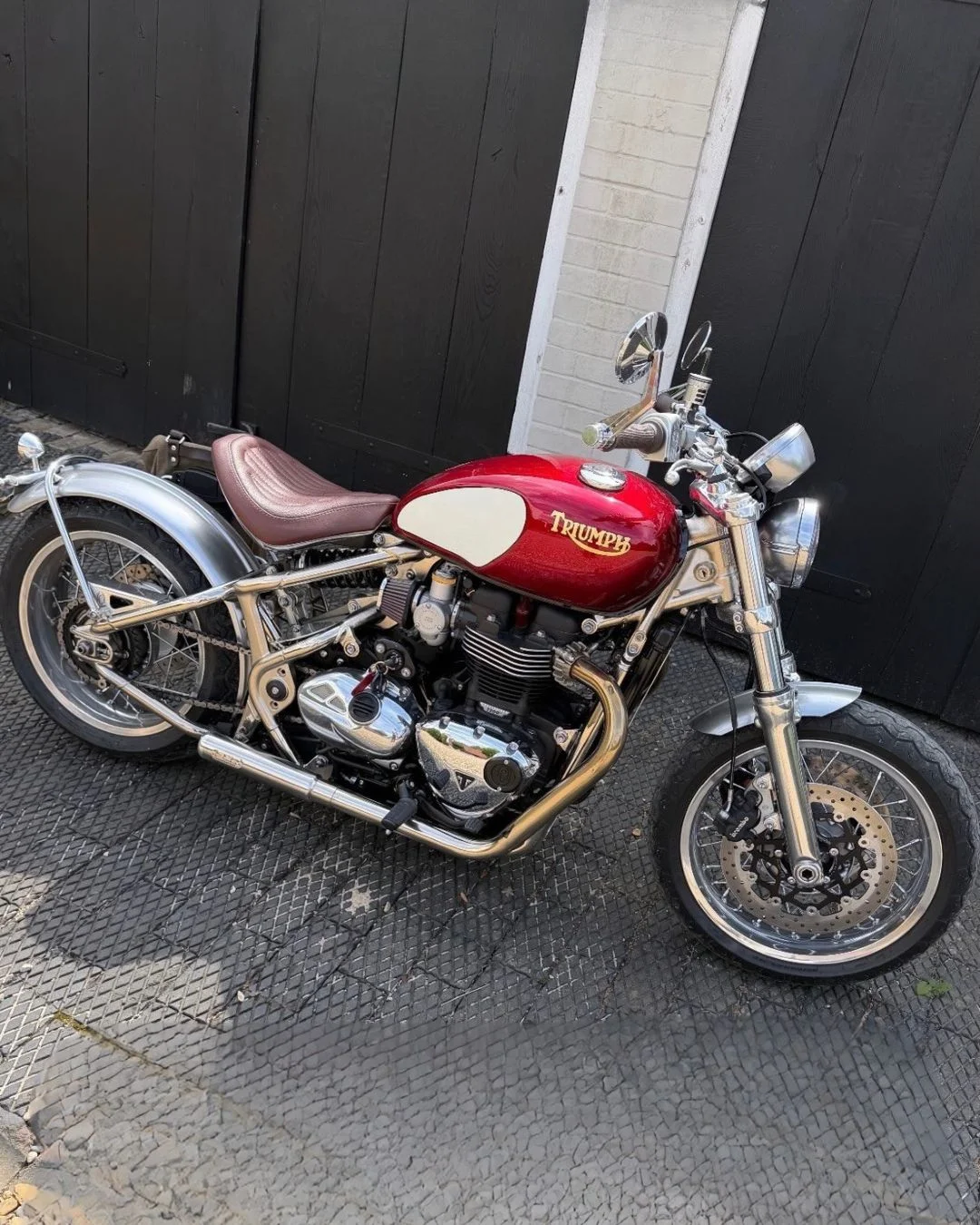
Metal as the unifying theme: nickel-plated frame, chrome, and polished aluminum
Around the fuel tank, the materials take center stage. The frame features a nickel-plated finish that transforms the bike’s appearance and creates a striking contrast with the black engine. Polished aluminum appears in several areas of the build, complemented by numerous chrome accents. Rather than hiding the mechanics, we chose to showcase them.
The wheels play a key role in defining this identity. The Triumph is equipped with 17-inch wheels at both the front and rear, featuring chrome rims and stainless steel spokes.
At the front, the shortened, polished aluminum fender exposes the wheel and lightens the front end. The same design approach was applied to the rear.
These modifications retain the Bobber’s characteristic low, muscular stance while giving the motorcycle a sleeker silhouette.
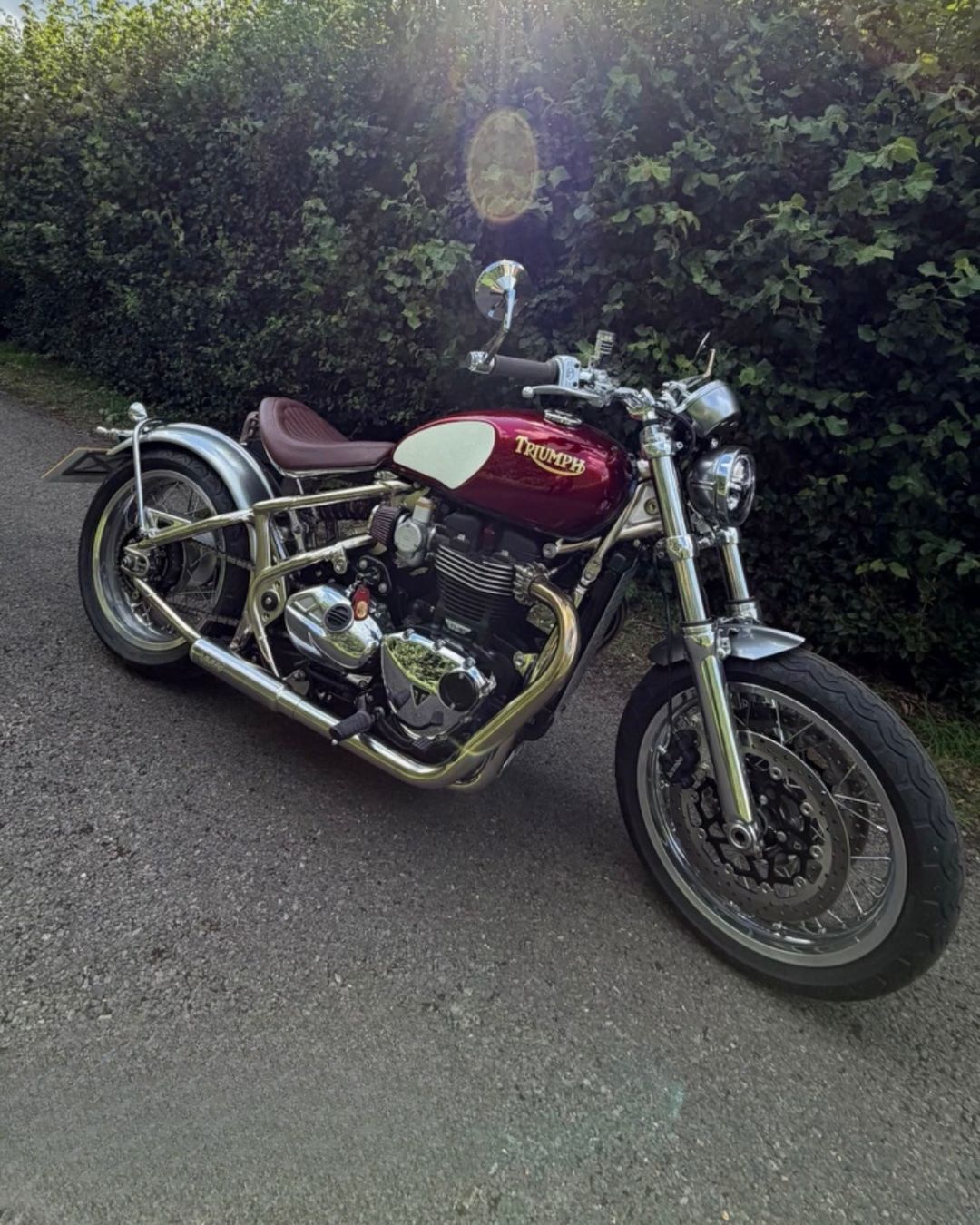
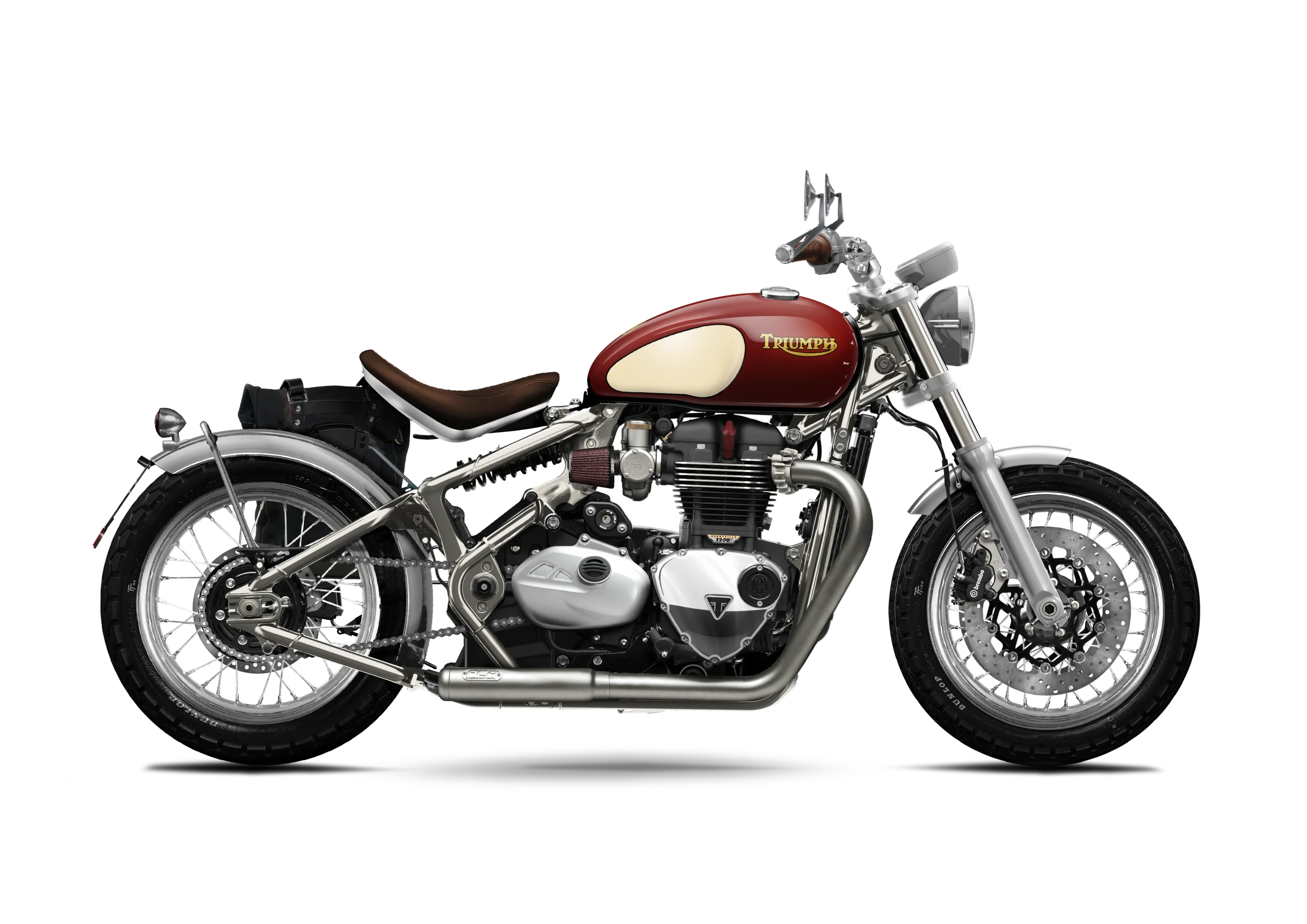
The 1200 cm³ twin-cylinder engine at the heart of the build
On a Triumph Bobber, it’s hard to take your eyes off the engine. And why should it? The twin-cylinder engine remains the deliberate centerpiece of this build. Metallic accents frame the black engine block, while K&N filters enhance its mechanical character.
The exhaust system also plays a key role in the bike’s design.
The FCR Original line follows the contours of the twin-cylinder engine before running very low along the Bobber. This placement visually opens up the center and rear sections of the Triumph.
Its metallic finish complements the nickel-plated frame, rims, and polished aluminum accents. It contrasts with the black of the engine.
Ultimately, every modification is based on the same idea: letting the motorcycle breathe.
A silhouette that can be taken in at a glance
Take a look at this Triumph from the side. The fuel tank is the first thing that catches your eye. Then the line flows naturally down toward the brown leather solo seat before meeting the rear wheel. Below that, the exhaust further elongates the silhouette. Up front, the shortened fender, Superbike handlebars, and small turn signals keep the overall look perfectly streamlined.
The saddle also plays a crucial role.
On a bobber, it’s hard to think of it as just an accessory. Its position and shape directly influence the bike’s proportions.
The brown leather adds a warmer touch amid the metal, chrome, and aluminum. Paired with handles in the same shade, it creates a visual connection between the front and the rear. Nothing seems superfluous.
And it is precisely this apparent simplicity that requires the most work.
A motorcycle designed as a unified whole
That’s how we approach every FCR Original project. We don’t view a build as just a series of parts to be replaced.
- A color influences the choice of a material.
- A saddle changes the way you perceive the reservoir.
- An exhaust system changes the overall look.
- A wheel or a fender can completely change the proportions.
Everything is connected. That’s why we design our projects as a whole before bringing them to life in our workshop in Chauvigny. The ultimate goal always remains the same: to create a motorcycle that’s cohesive from every angle.
Transform without altering the essence
That’s probably what best defines this Triumph Bobber 1200.
Even when deeply customized, it remains instantly recognizable. It’s still a Triumph. Still a Bobber. But it now has its own identity.
The paint, the nickel-plated frame, the chrome wheels, the brown leather, the polished aluminum, the fenders, and the exhaust come together to form a new whole without ever detracting from what made the original motorcycle so appealing.
That’s the boundary we love to explore here at FCR Original.
Modify it enough to create something unique. But never to the point of forgetting the motorcycle that lies beneath.
Preparation Styles
Bobber or Café Racer
Two trends in motorcycle customization, two opposing philosophies. Le Bobber retire pour aller à l’essentiel. Le Café Racer tend la ligne vers la performance.
At FCR Original, we offer both styles. The same Triumph model can be customized in either direction depending on the project.
Our Other Interpretations of the Triumph Bobber
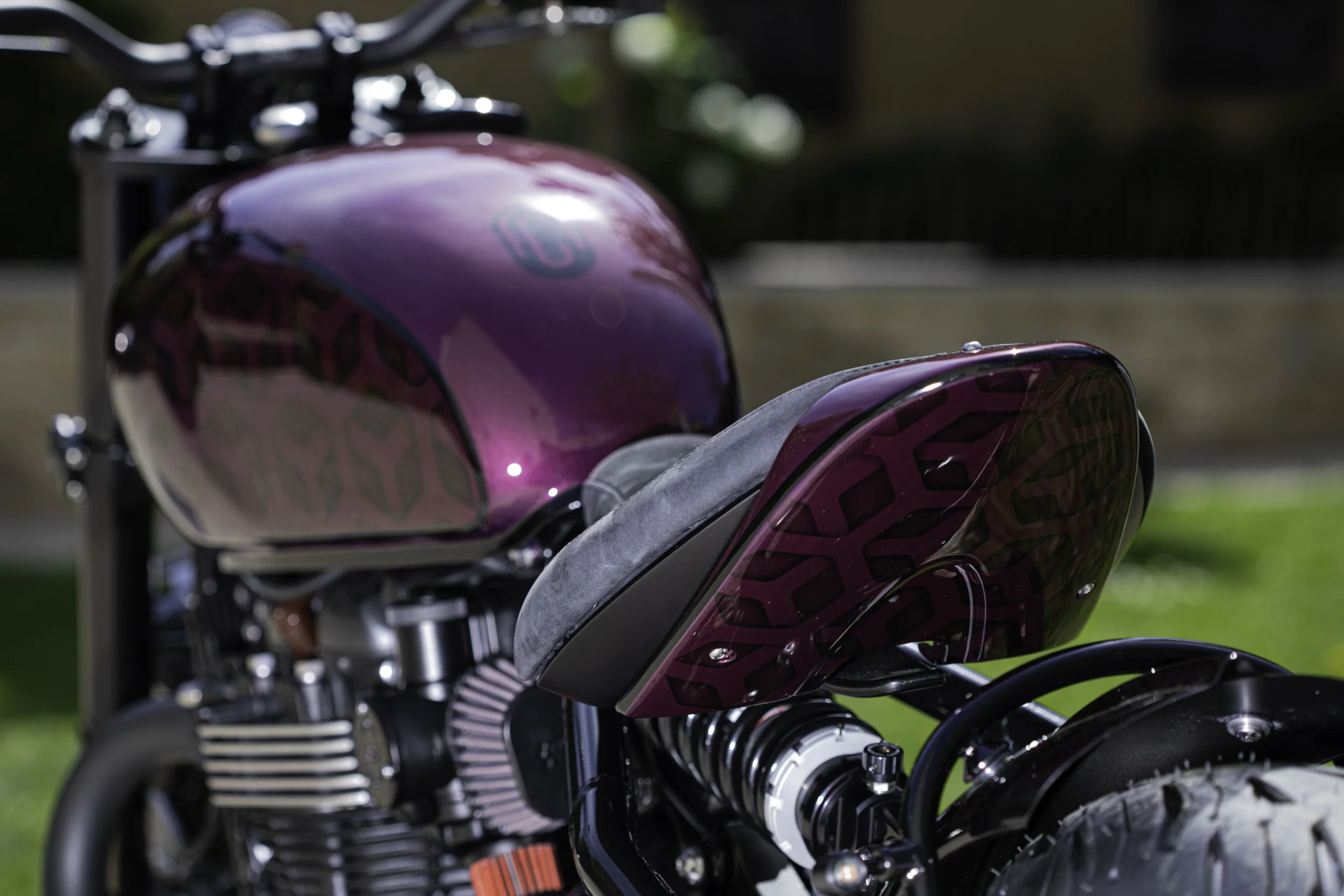
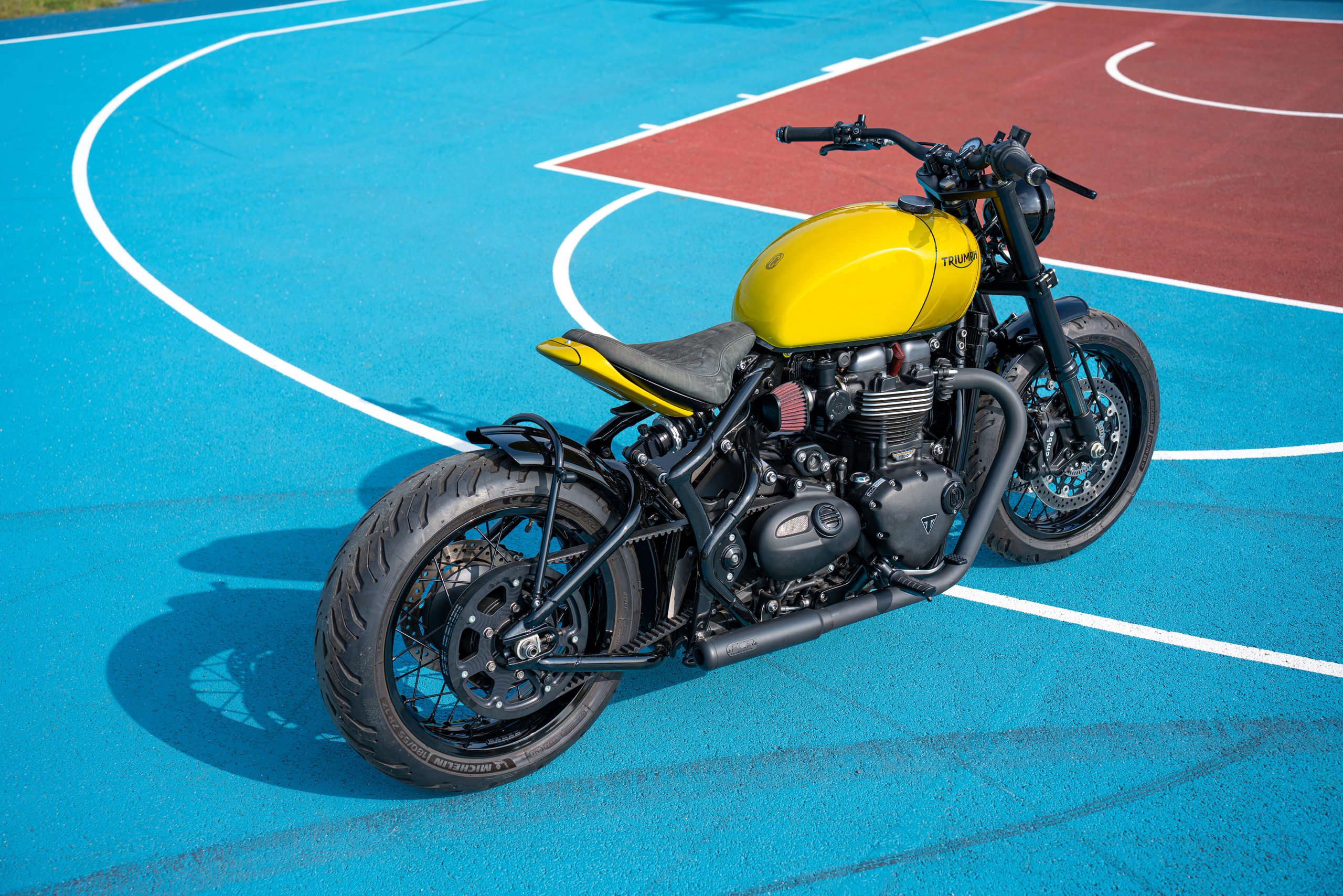
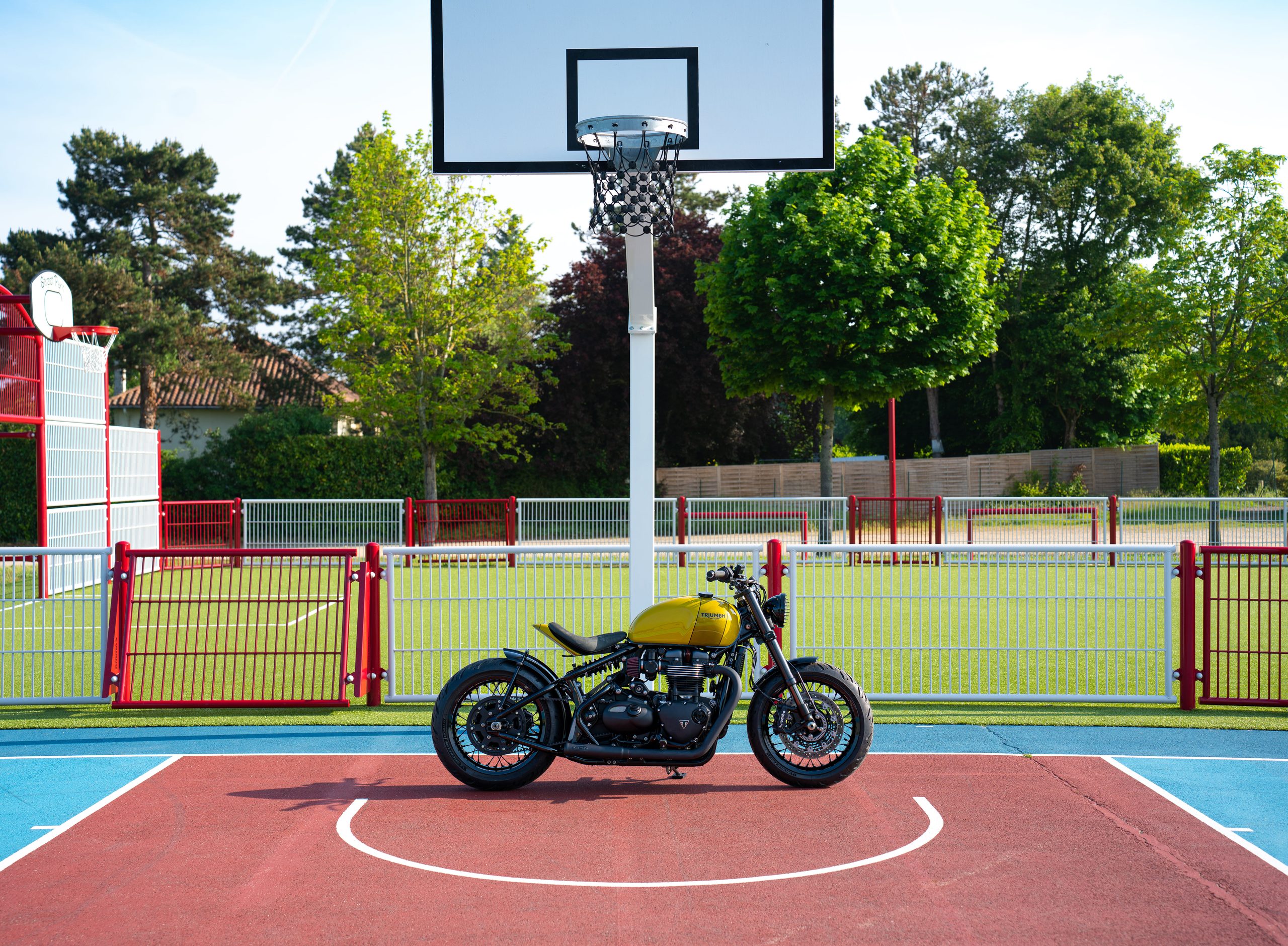
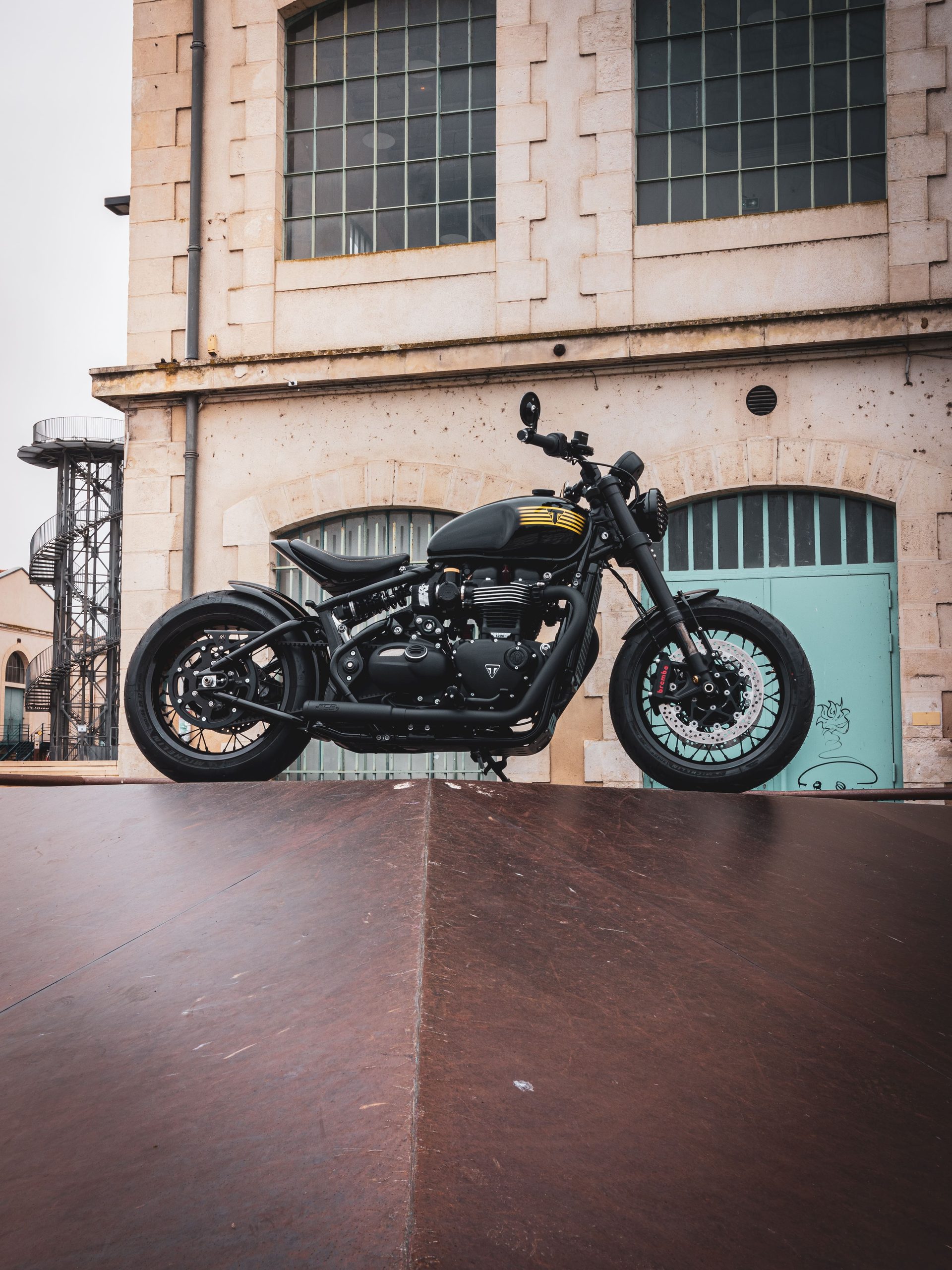
Tom Fletcher’s motorcycle embodies one vision of the Bobber. It’s not the only one. Every project that comes through our workshop starts with a different aesthetic direction: a color, a material, a vibe. Here are a few of our other custom builds based on the Triumph Bobber.
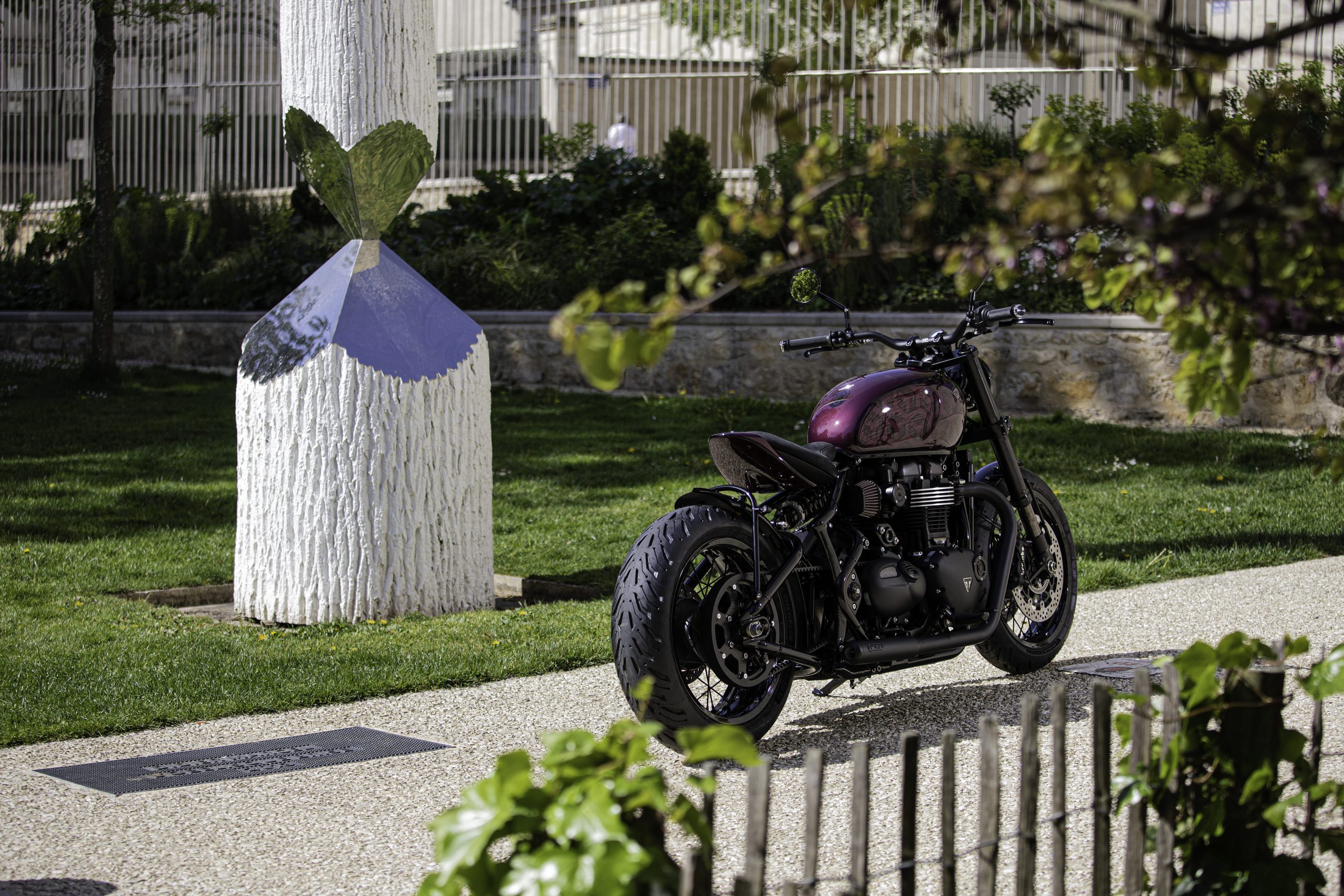
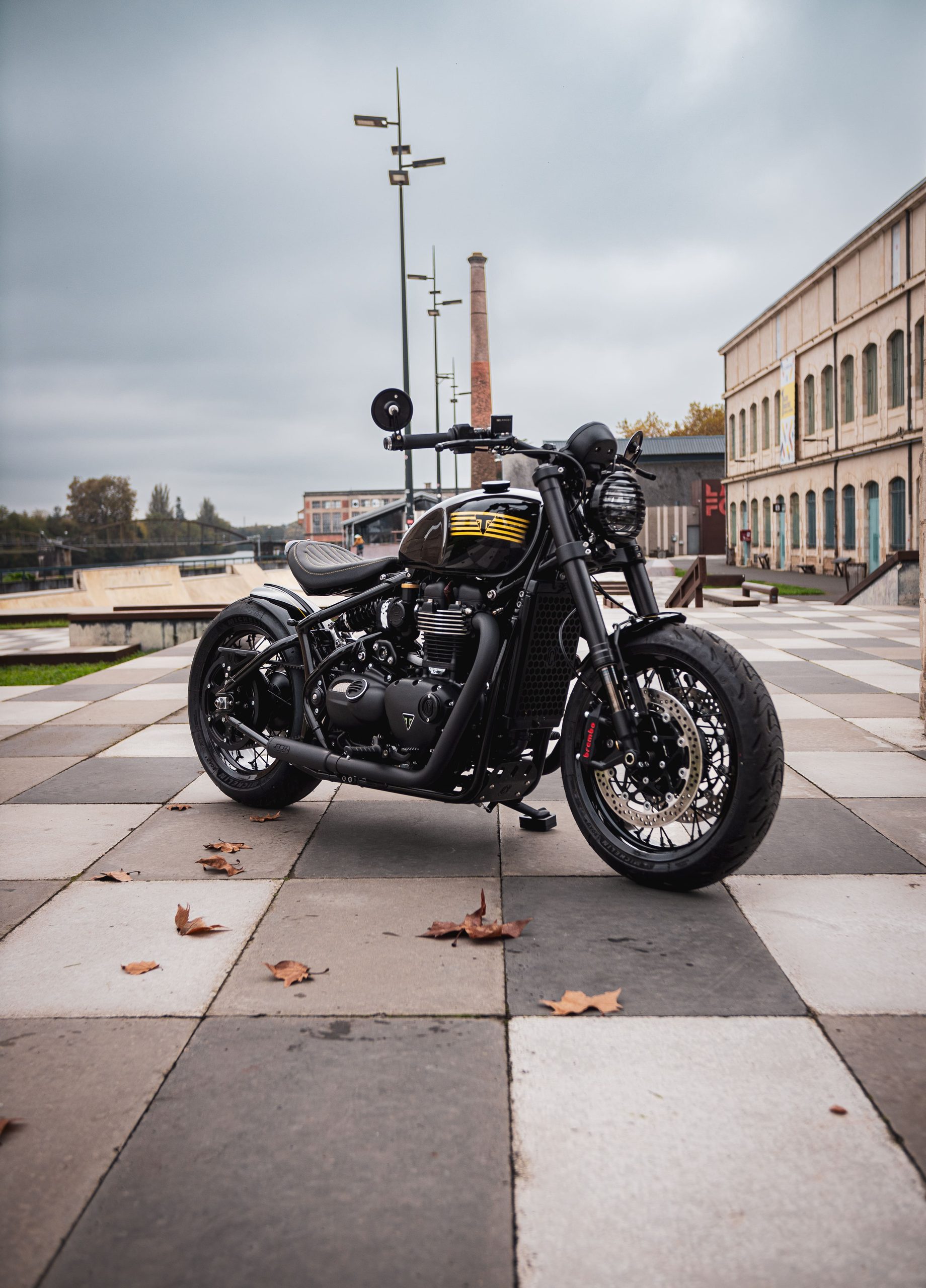
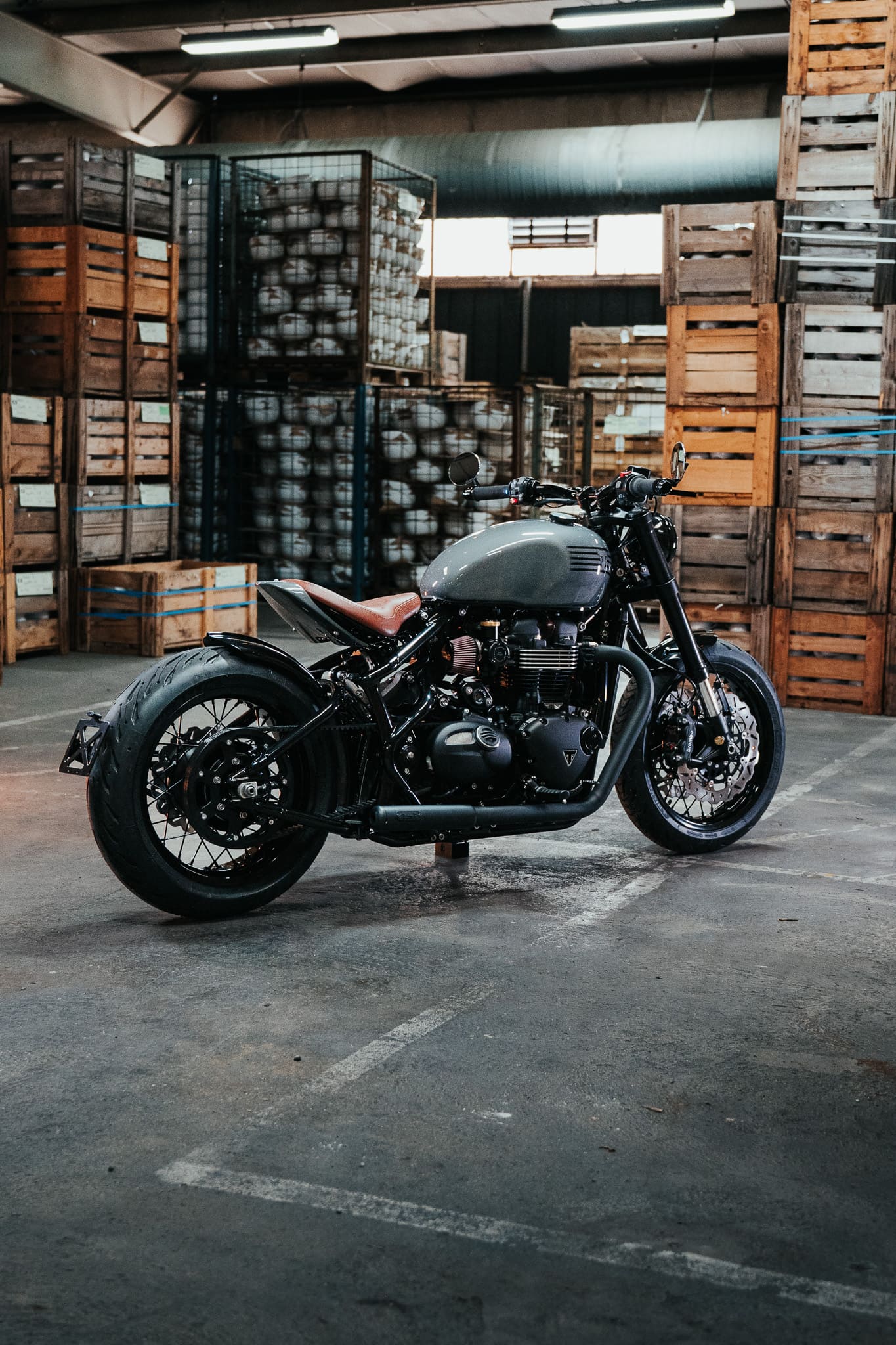
What if the next Bobber were yours?
Tom Fletcher’s Triumph is a one-of-a-kind creation. It can also serve as a starting point.
Perhaps you like its combination of red and cream, its nickel-plated frame, and its chrome accents. Or maybe you’re already envisioning something completely different: a darker shade, a different type of leather, a more raw finish—a more classic approach, or, on the contrary, a more radical one.
That is exactly where an FCR Original project begins.
The goal isn’t to create an exact replica of an existing motorcycle, but to understand what appeals to you so you can build your own interpretation of the Triumph Bobber 1200. Colors, materials, proportions, details, and finishes then allow you to create a motorcycle with its own unique identity.
From the initial concept to the final details crafted in our workshop, every FCR Original build follows a custom approach. The choice of the base bike, the aesthetic direction, colors, materials, riding position, and finishes—every decision contributes to the motorcycle’s final identity.
Are you working on a Triumph Bobber project?
Upgrade Your Triumph Bobber with FCR Accessories
Do you already own a Triumph Bobber and want to gradually upgrade it?
FCR Accessories has developed a line of products specifically for Bobbers, designed in our workshop and tested on our own custom bikes. Exhaust, engine skid plate, chain guard, radiator grille, license plate mount: each part is designed to blend seamlessly with the bike’s lines and is plug-and-play.
Frequently Asked Questions
Everything You Need to Know About the Triumph Bobber
01 What Is a Bobber Motorcycle?
The Bobber is a style of motorcycle that originated in American custom culture. The idea is to remove features considered unnecessary and shorten the fenders to create a more stripped-down machine.
Today, the Bobber style is recognized by its low profile, solo seat, short fenders, exposed mechanical components, and minimalist aesthetic.
02 What is the difference between a Bobber and a Café Racer?
Both are part of the motorcycle customization culture, but they reflect two different philosophies.
The Café Racer is inspired by British sport bikes and aims for a more dynamic silhouette and riding position. The Bobber emphasizes a low, stripped-down motorcycle with a solo seat and exposed mechanical components.
03 What kind of engine does the Triumph Bobber have?
The Triumph Bonneville Bobber is built around a 1,200-cc parallel-twin engine from the Bonneville family.
Beyond its mechanical characteristics, the dimensions and architecture of this engine play a key role in the motorcycle’s design. That is why we generally seek to highlight it rather than conceal it.
04 Why is the Triumph Bobber a good base for a custom build?
Its design already has a strong identity while offering numerous customization options. The paint job, seat, wheels, fenders, exhaust, handlebars, and finishes can all be modified to profoundly change the bike’s character without compromising its overall design.
On such a stripped-down motorcycle, every component is clearly visible. Even a subtle modification has a significant impact on the bike’s silhouette.
05 Can you order a Triumph Bobber just like Tom Fletcher’s?
Tom Fletcher’s Triumph Bobber 1200 is a custom bike built specifically for this project.
Nevertheless, it can serve as a source of inspiration for your own motorcycle. Certain colors, materials, or aesthetic approaches can fuel a new project, with the goal of creating a custom bike that has its own identity.
06 Can you choose the colors and finishes for your Bobber?
Paint and finishes are an integral part of a custom bike’s identity. Colors, leather, and metallic finishes help define an aesthetic direction and create a sense of cohesion among all the bike’s components.
Tom Fletcher’s Triumph is a good example of this, with its combination of deep red, cream, gold, brown leather, chrome, and aluminum.
07 How to Start a Triumph Bobber Project with an Original FCR?
It all starts with a discussion about the motorcycle you want to build. The desired style, sources of inspiration, colors, materials, and extent of customization lay the groundwork for the project.
Our team will then work with you to plan the project and carry it out in our workshop in Chauvigny.
Are you already picturing your ideal Triumph Bobber?
Photo and video credits: FCR Original