At FCR Original, we love motorcycles that tell a story. Motorcycles with character, with soul, with a signature. Among them, the Bobber holds a special place.
Born in American garages in the 1930s, this style has crossed almost a century without ever losing its founding principle: strip away everything that isn’t essential. Today, we reinterpret it on the Triumph Bonneville 1200 Bobber, in our workshop in Chauvigny, France. Here is its story, and how we carry it forward.
Where does the Bobber come from?
The Bobber is a motorcycle style born in the United States in the 1930s. It was inspired by the stripped-down racing machines of Class C, created in 1933 by the American Motorcyclist Association. Its name comes from the “bob-job”: riders cut down, or “bobbed”, the rear fender to lighten the bike. The principle has never changed: cut, lighten, remove the superfluous.
Timeline
The Bobber in 7 dates
Nearly a century of history, from American garages to our workshop in Chauvigny, France.
-
The
1920sThe “cut-down”
Early American riders lighten their stock motorcycles by stripping off everything that isn’t essential.
-
1933
Class C sets the template
The American Motorcyclist Association creates a racing class for catalogue motorcycles. No front fender, a cut-down rear: these machines inspire the “bob-job”.
-
After
1945The style takes hold
Back from the war, a generation of riders starts customising their motorcycles. The Bobber becomes a style in its own right.
-
1950
→ 1969The Chopper breaks away
The most extreme bob-jobs give birth to the Chopper, made famous by the film Easy Rider in 1969.
-
Late
1990sThe bob-job becomes the “bobber”
Today’s name catches on and the style makes a strong comeback on the custom scene.
-
2012
FCR Original
FCR Original is born
Our custom motorcycle workshop opens its doors in Chauvigny.
-
2017
FCR Original
La Triumph Bonneville Bobber
Triumph brings the codes of the genre to a modern motorcycle. It becomes the base of our Bobber range.
It all began before the word “design” had even entered the riders’ vocabulary. As early as the 1920s, the first riders practised the “cut-down”: they removed everything that weighed down their stock motorcycle. Simple, almost instinctive gestures.
In 1933, Class C changed everything. This racing class only accepted catalogue motorcycles. The Indian Daytona Scouts and Harley-Davidson WLDRs that competed in it ran without a front fender and with a rear cut down to the bare minimum. On the street, riders wanted the same.
The bob-job was born.
At the time, a motorcycle was not just a means of transport. It became an ode to independence, a way of riding differently and of making the machine your own.
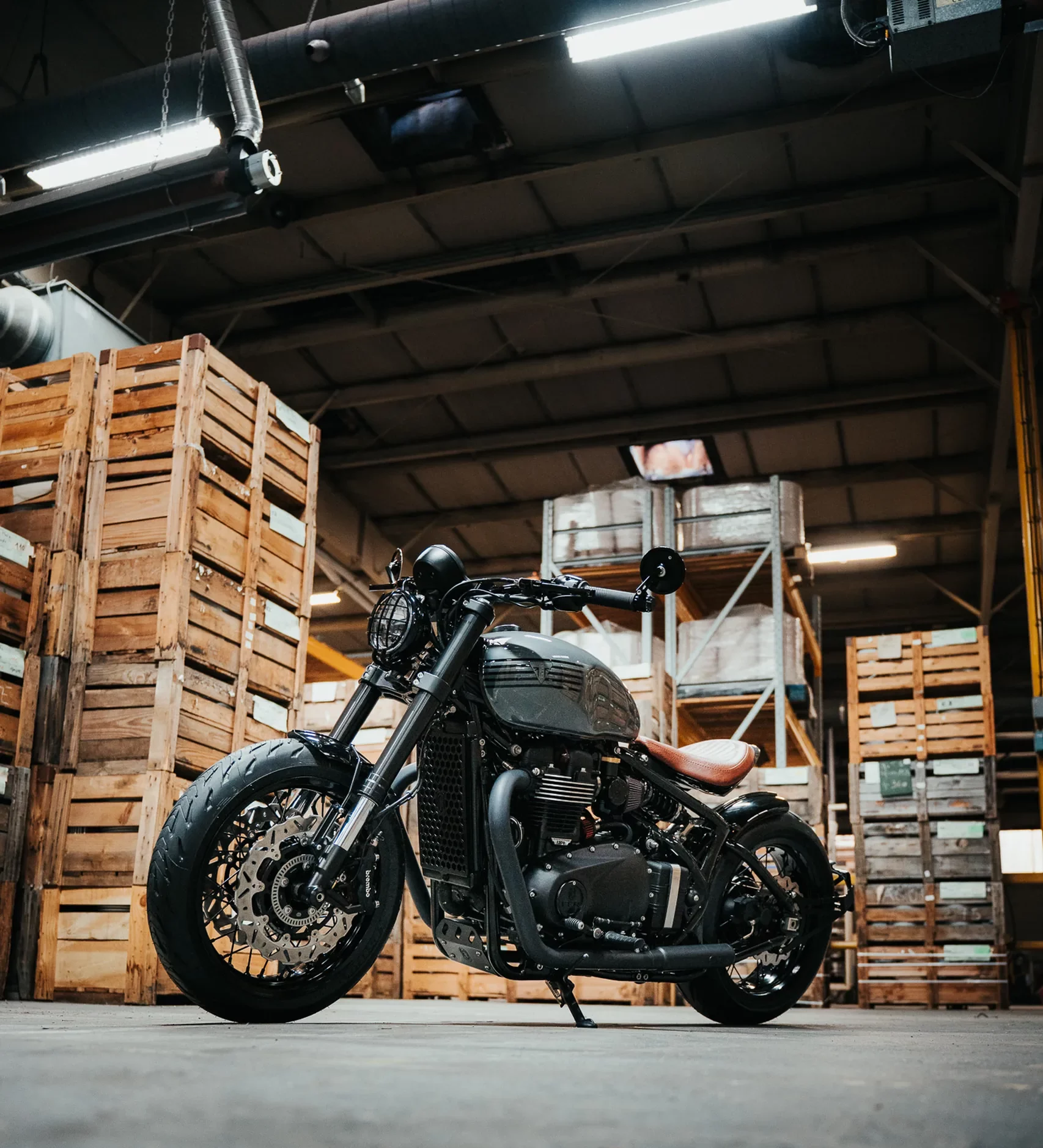
How did the Bobber become a style in its own right?
The Bobber took hold after the Second World War. Back home, a generation of riders sought to rediscover sensations and to stand out. Bob-jobs multiplied, each one reflecting the taste of the person who built it. The style became raw, low, compact, quiet or wildly expressive, depending on the hand that shaped it. In the 1950s and 1960s, the movement branched out. Some machines headed for the show circuit, others for drag racing. The most extreme gave birth to the Chopper, made world-famous by the film Easy Rider in 1969. The Bobber then faded for a while behind its more spectacular cousin.
It came back strongly in the late 1990s, when the word “bob-job” gave way to the one we use today: “bobber”.
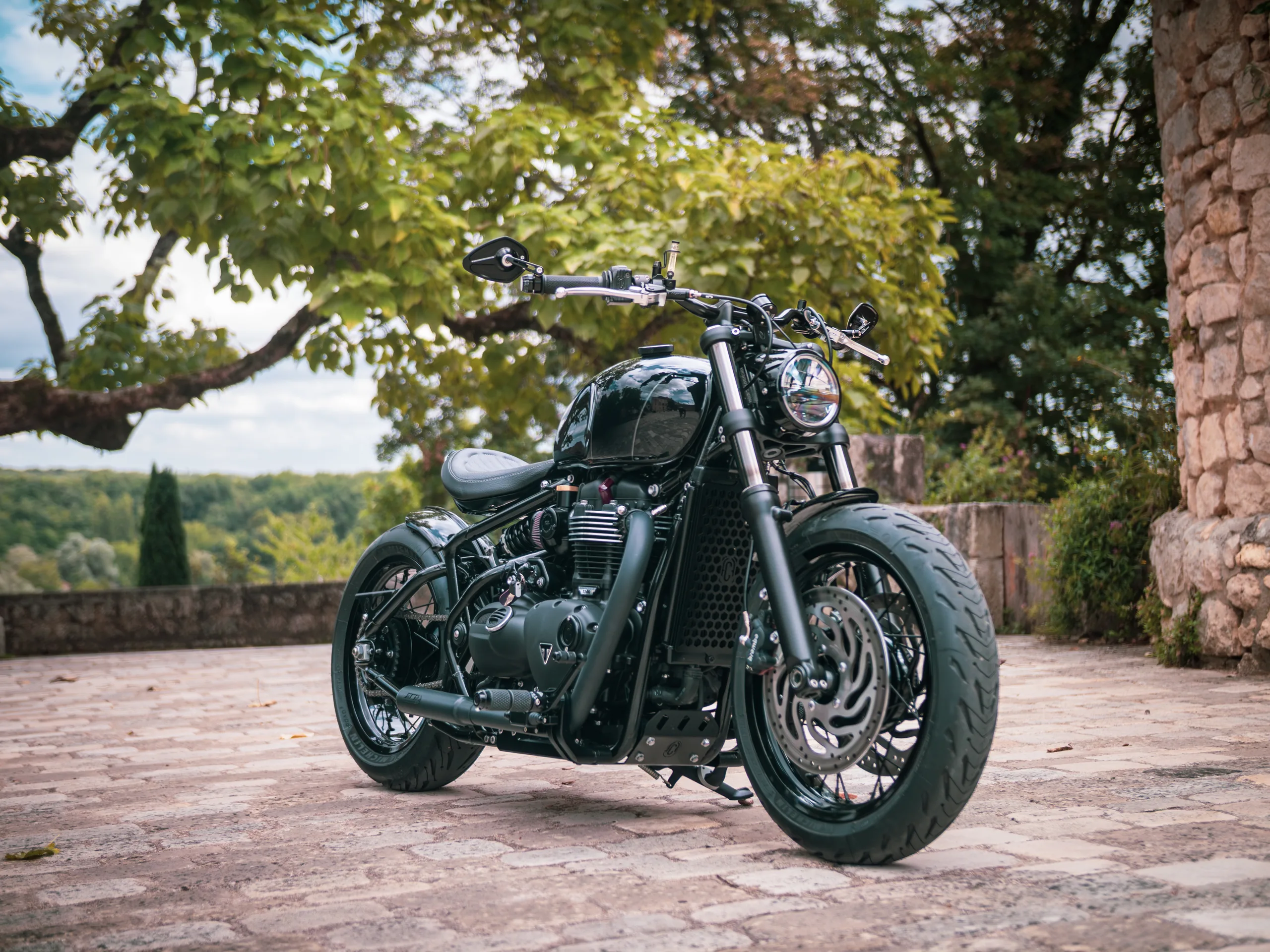
Bobber or Chopper: what is the difference?
The Bobber takes away, the Chopper transforms. The Bobber lightens a stock motorcycle while keeping its original frame and geometry. The Chopper cuts and re-welds the frame, extends the fork and stretches the silhouette. Where the Chopper stretches the lines, the Bobber condenses and hardens them.
- The Bobber: original frame, cut-down fenders, solo seat, low and compact silhouette.
- The Chopper: modified frame, extended fork, high handlebars, stretched and spectacular silhouette.
The Chopper was in fact born from the most radical bob-jobs. The two styles share the same roots, but follow two opposite philosophies: restraint on one side, exuberance on the other.
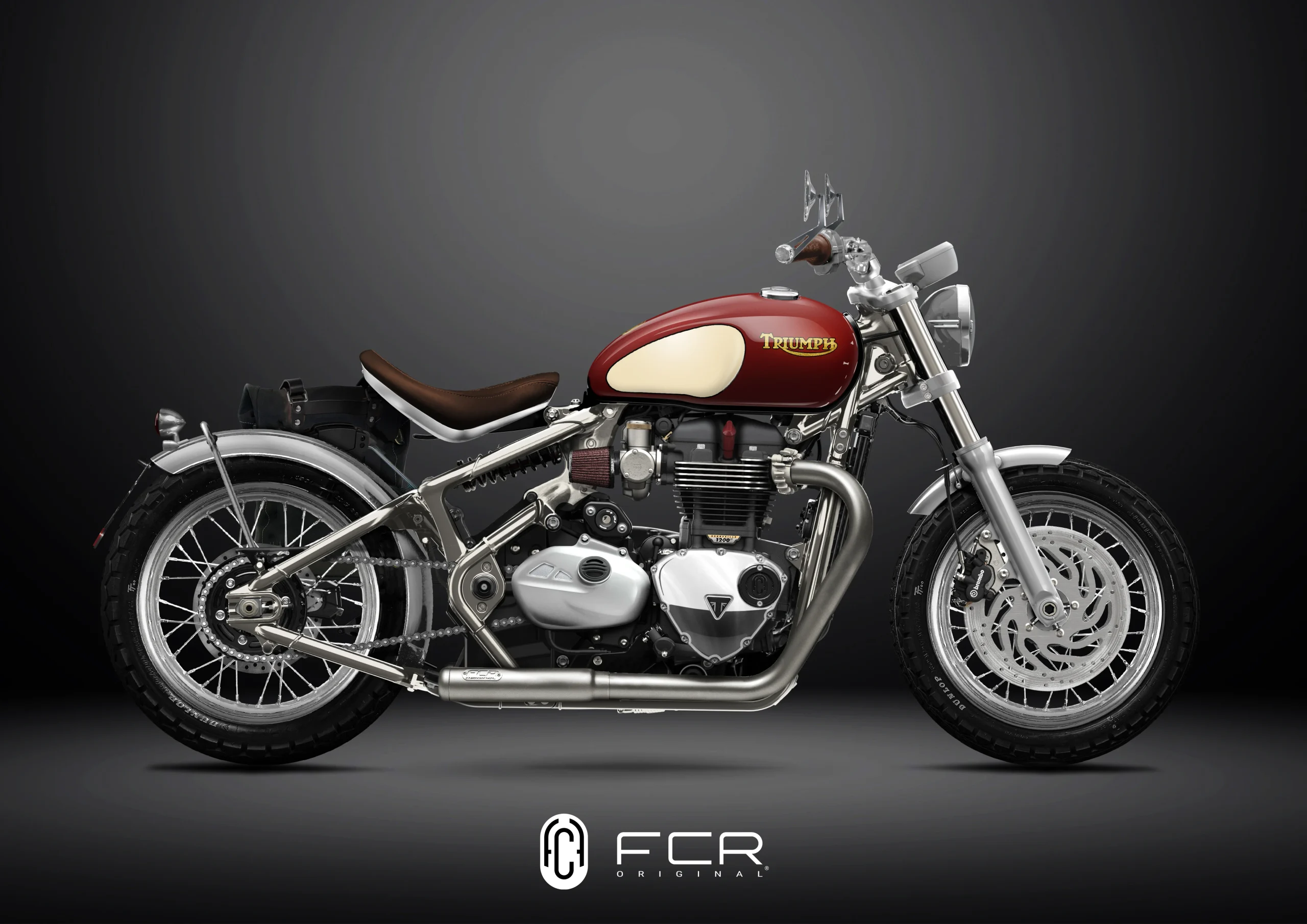
What is a modern Bobber?
A modern Bobber keeps the founding spirit of the style, a motorcycle reduced to the essentials and focused on sensations, while adding the comfort, reliability and refinement of a contemporary design. Choosing a Bobber today is not just an aesthetic decision. It means embracing powerful minimalism, raw elegance and authentic riding.
Manufacturers have understood this. In 2017, Triumph brought the codes of the genre to the Bonneville Bobber: solo seat, stripped-back rear, low riding position and an engine on full display.
A motorcycle of today that speaks the language of yesterday’s Bobbers.
This balance between heritage and modernity is precisely what we strive for at FCR Original.
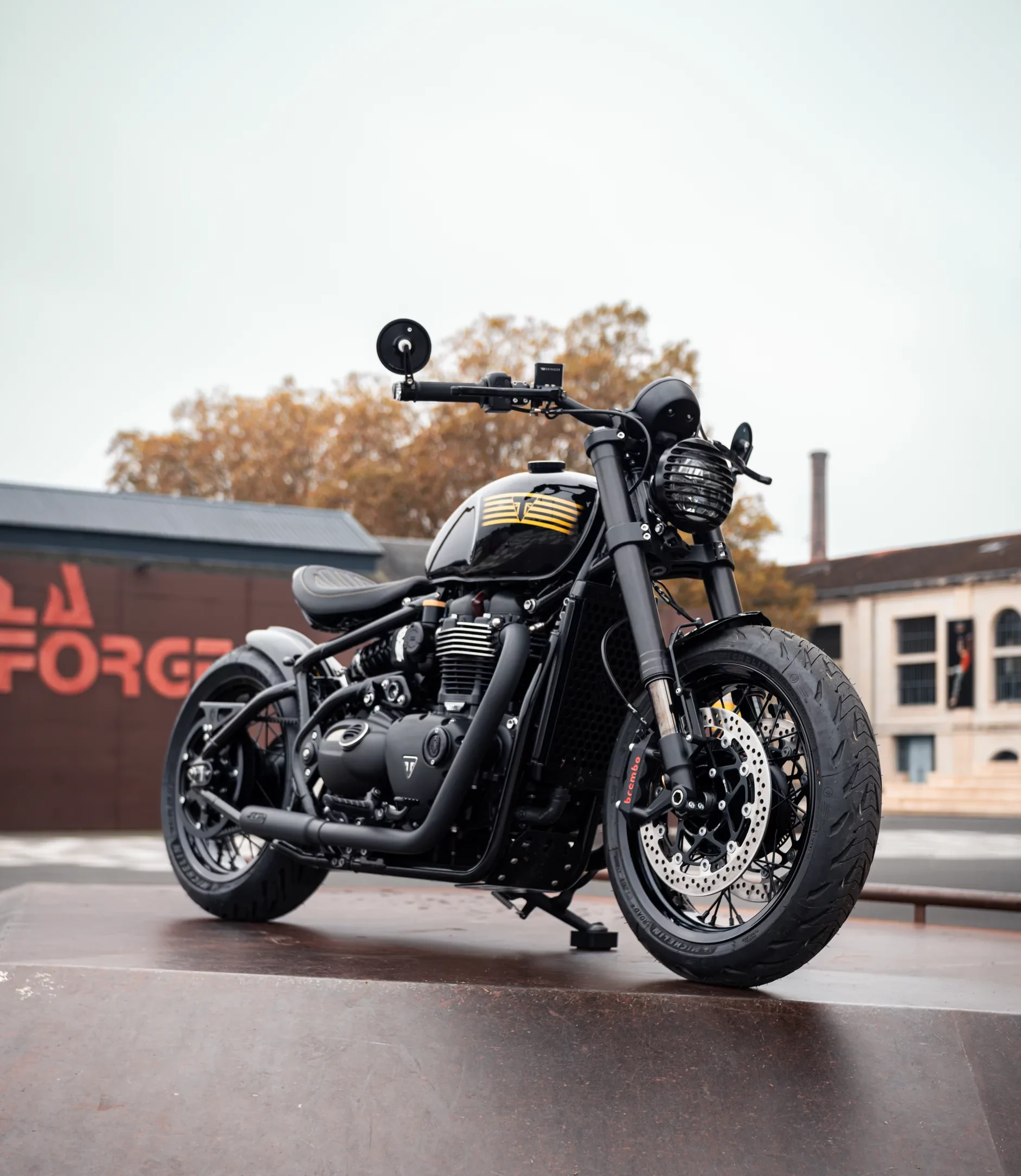
Why did FCR Original choose the Triumph Bonneville 1200 Bobber?
Because it brings together everything we look for at the start of a project: a strong identity, reliable mechanics and rare potential for transformation. Its 1,200 cc High Torque twin delivers 77 hp and 106 Nm of torque from 4,000 rpm. Its hidden rear shock recreates the look of a vintage hardtail frame. It is a noble, expressive and authentic motorcycle.
Its lines are already clean. On a base like this, every modification becomes immediately visible.
It is a demanding exercise, but above all a freedom.
All our builds start from a strictly stock motorcycle, supplied by us. A sound, compliant base that keeps its manufacturer warranty and service support for two years.
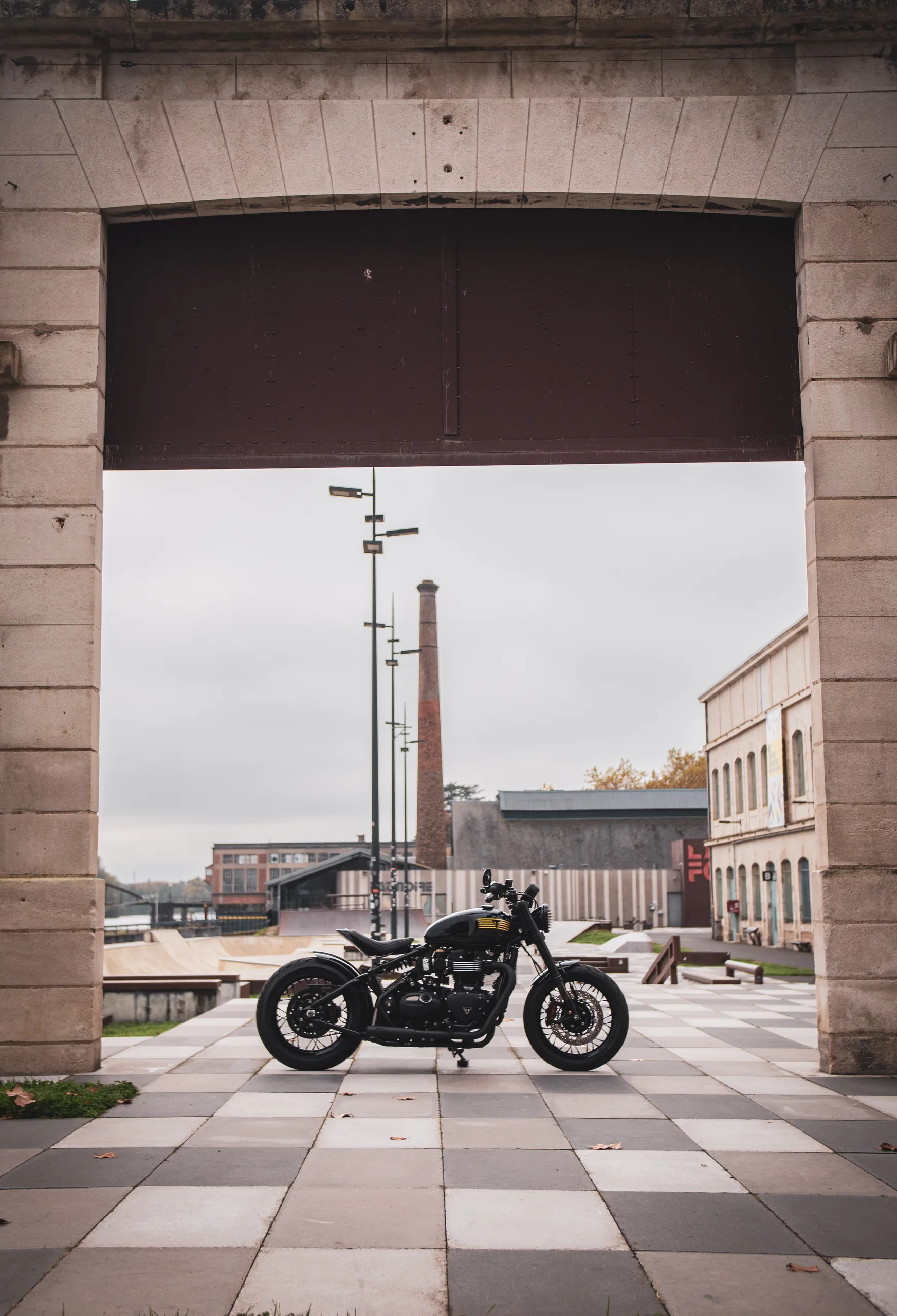
American soul, British finesse: our interpretation of the Bobber
Our work on the Bonneville 1200 Bobber is based on a deliberate fusion of two cultures. We draw on the power and attitude of the original American Bobbers, while preserving the precision and nobility of Triumph’s British lines. The result does not seek to reproduce an existing model: it reinvents the Bobber in a French interpretation, more balanced, purer, more accurate.
Our approach is never excessive.
Every gesture must be precise, controlled, coherent.
You will find this union of two worlds in our Bobber range.
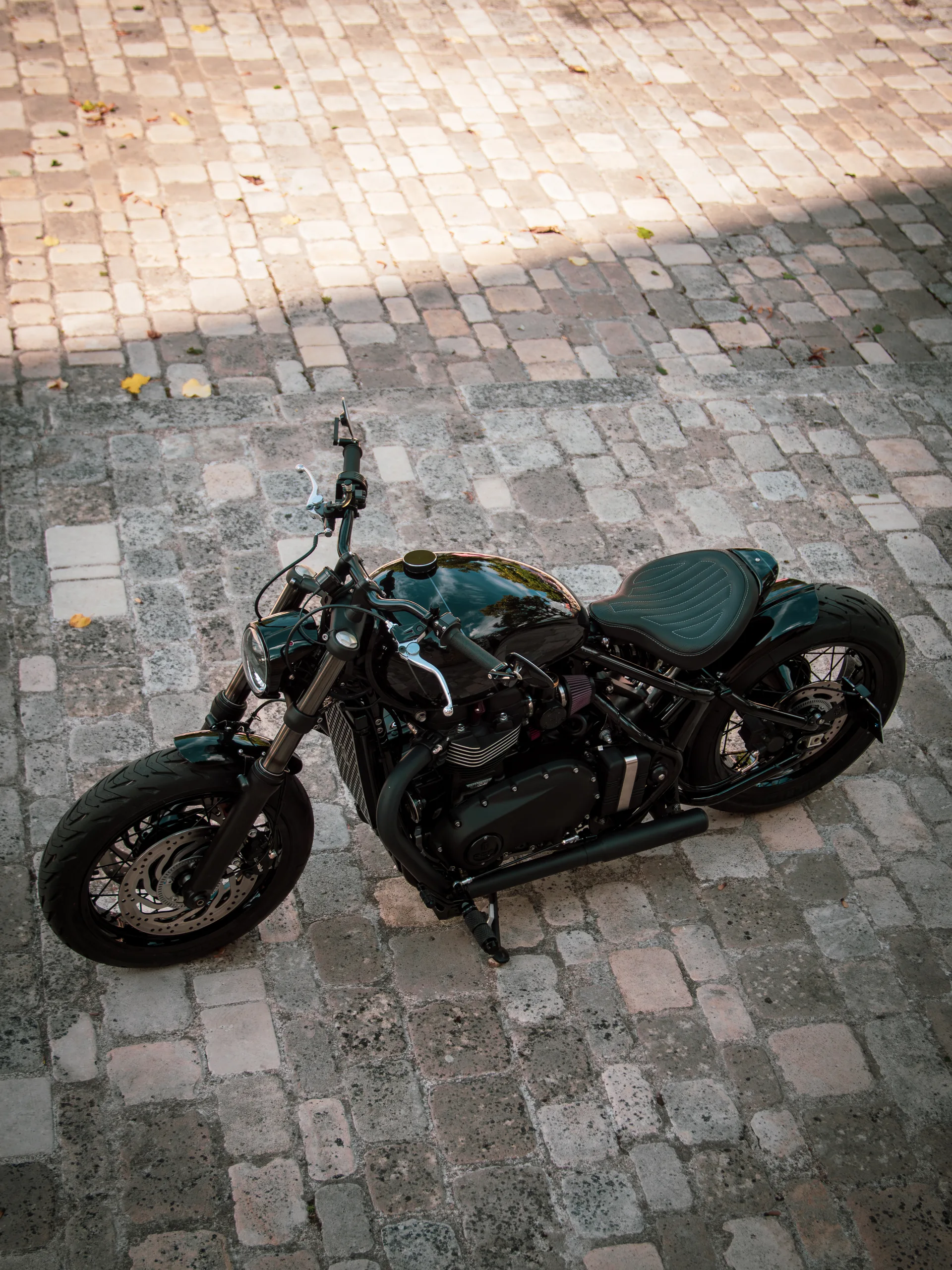
How is an FCR Original Bobber born?
Every Bobber begins with listening. Before drawing anything, we seek to understand the rider: their story, how they ride, what they want to express through their motorcycle. We take their height, weight and intended use into account to define the seat height and riding position.
Then comes the work with our design office. We sketch, model, adjust. We remove the superfluous, we refine the lines, we define the motorcycle’s new identity.
It then comes to life in our workshop in Chauvigny.
An FCR Original Bobber is not just a transformed motorcycle. It is an extension of the person who rides it.
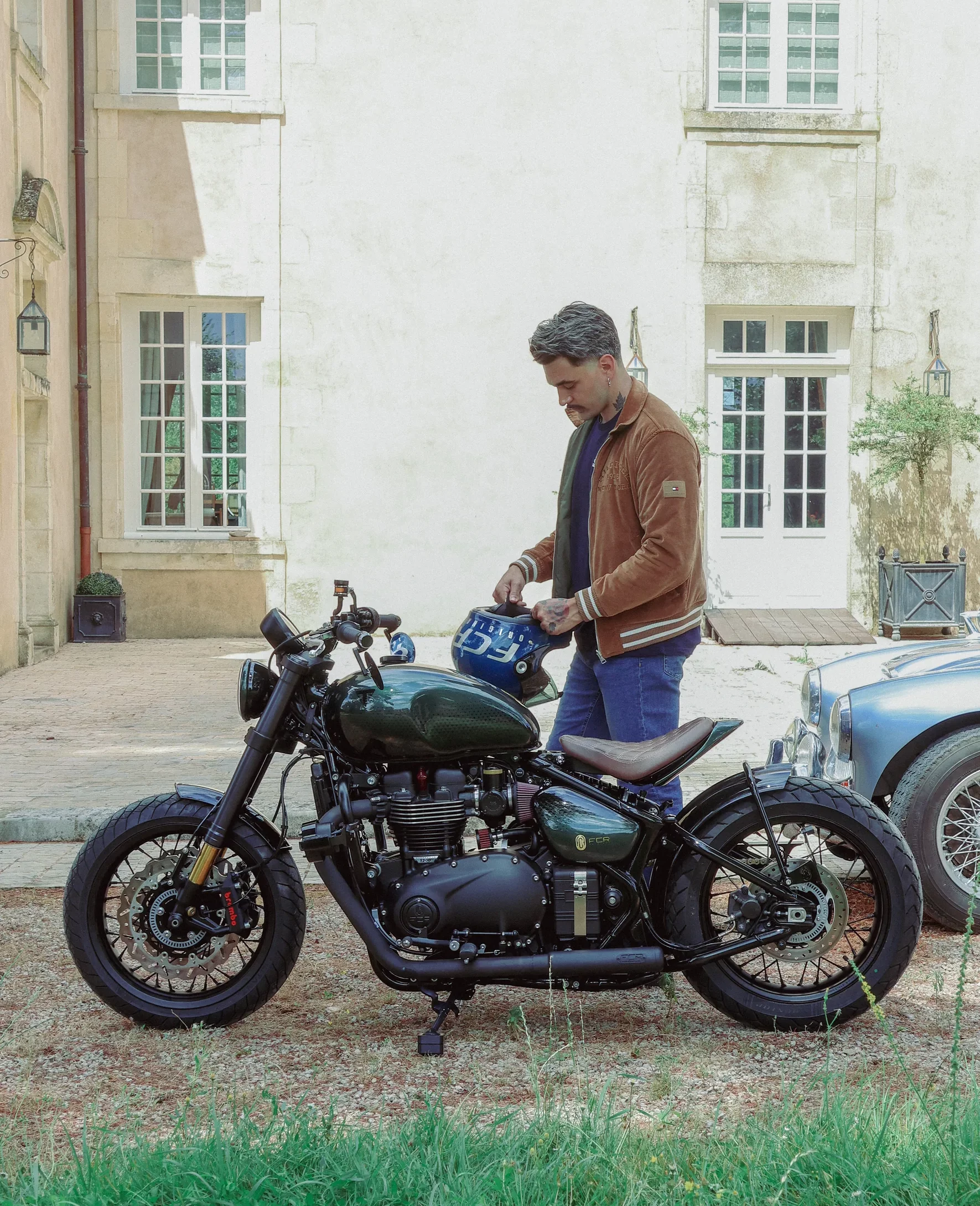
A compact, low and taut silhouette
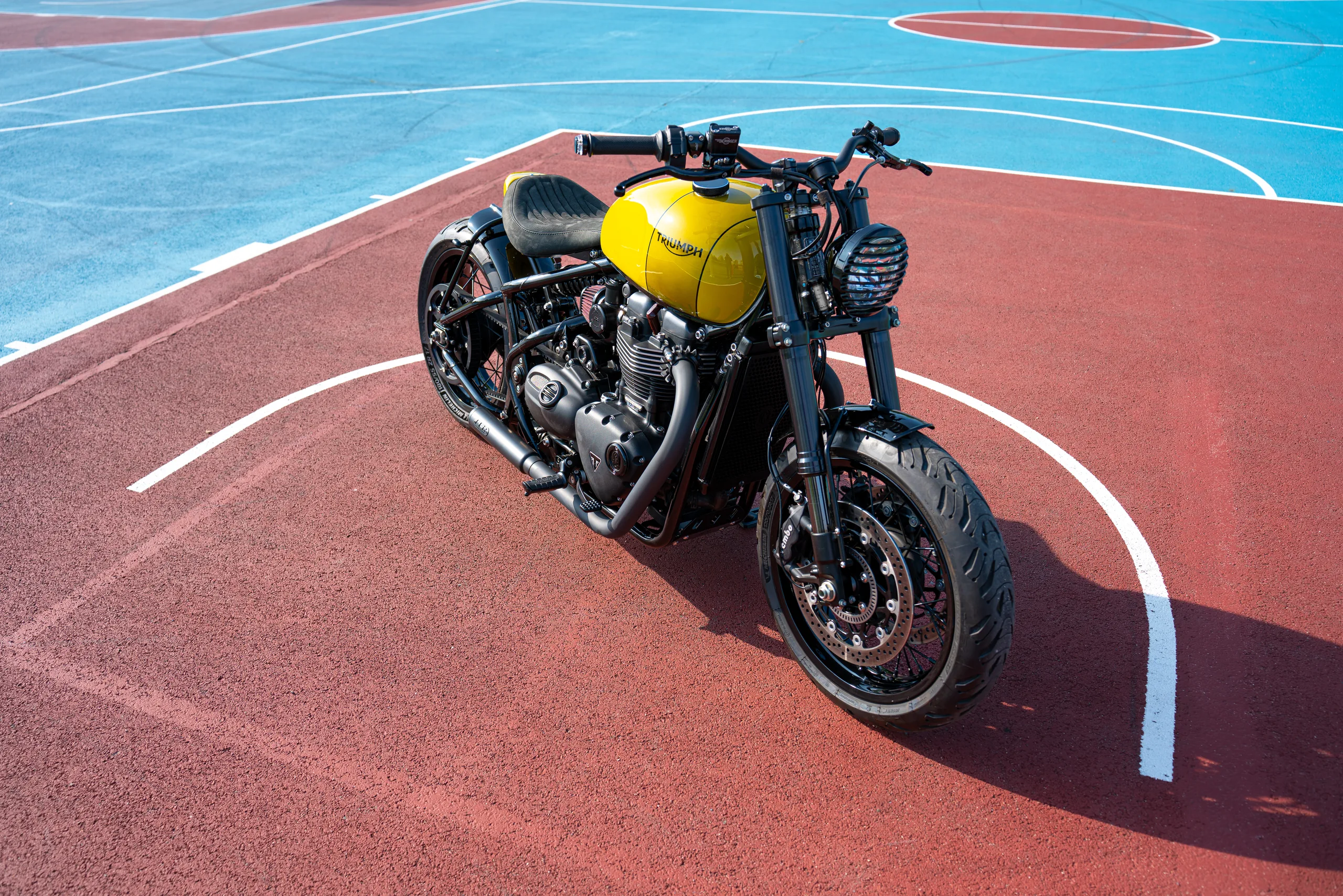
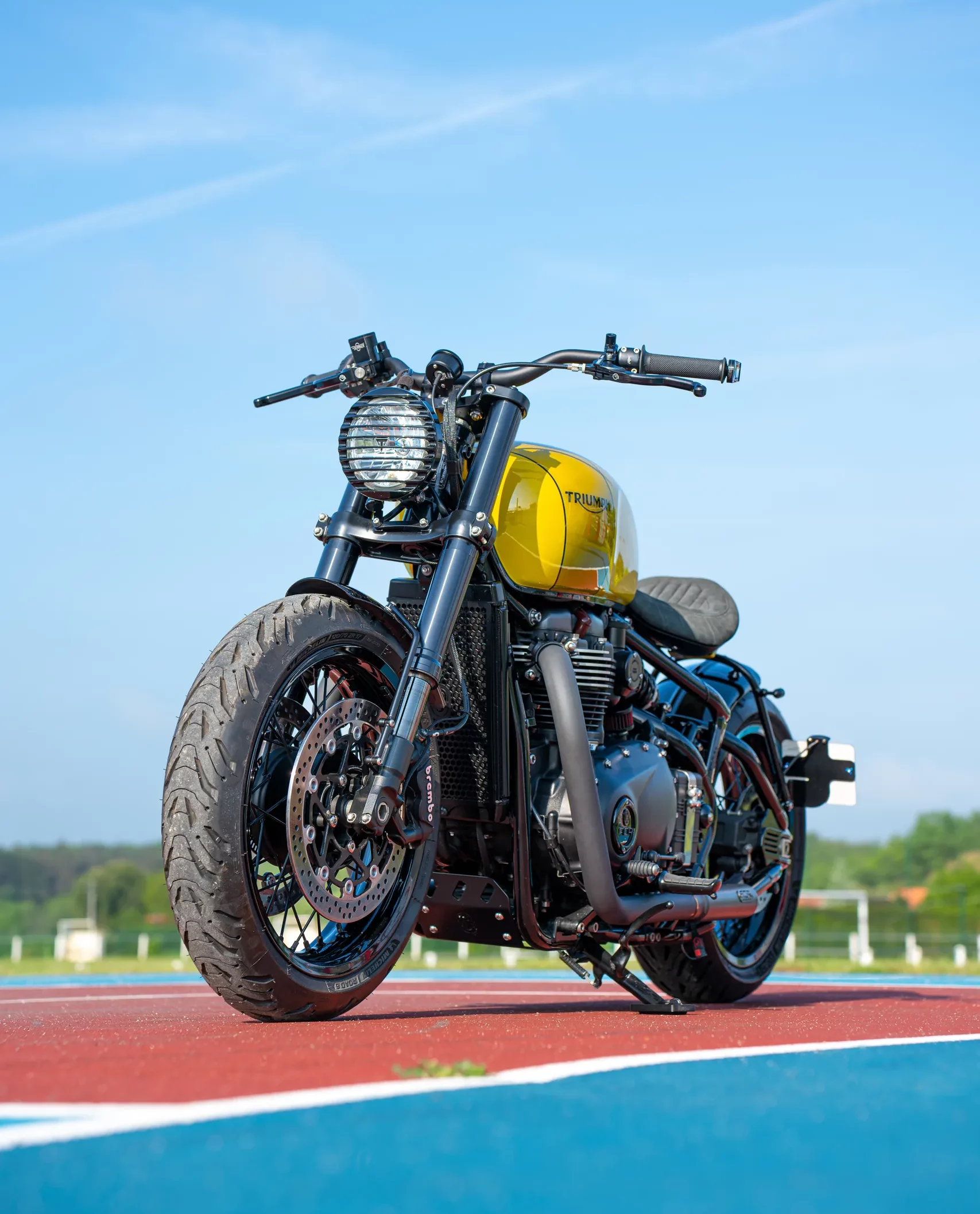
Notre vision du Bobber repose sur une posture. La moto doit être compacte, basse, musclée Our vision of the Bobber is built on stance. The motorcycle must be compact, low, muscular without being bulky. It must radiate immediate confidence and natural elegance. To achieve this, we rework the front end, the wheels and the overall line of the Bonneville 1200 Bobber in depth.
- A black inverted fork, mounted on triple clamps designed and made to measure, for greater rigidity and riding precision.
- 17-inch wheels front and rear, for a sleeker, more dynamic look.
- A deliberately horizontal line, drawing the eye from the tank to the rear wheel.
- Cut-down fenders, a minimalist touch true to the bob-job spirit.
Every element contributes to a pure, graphic and coherent silhouette.
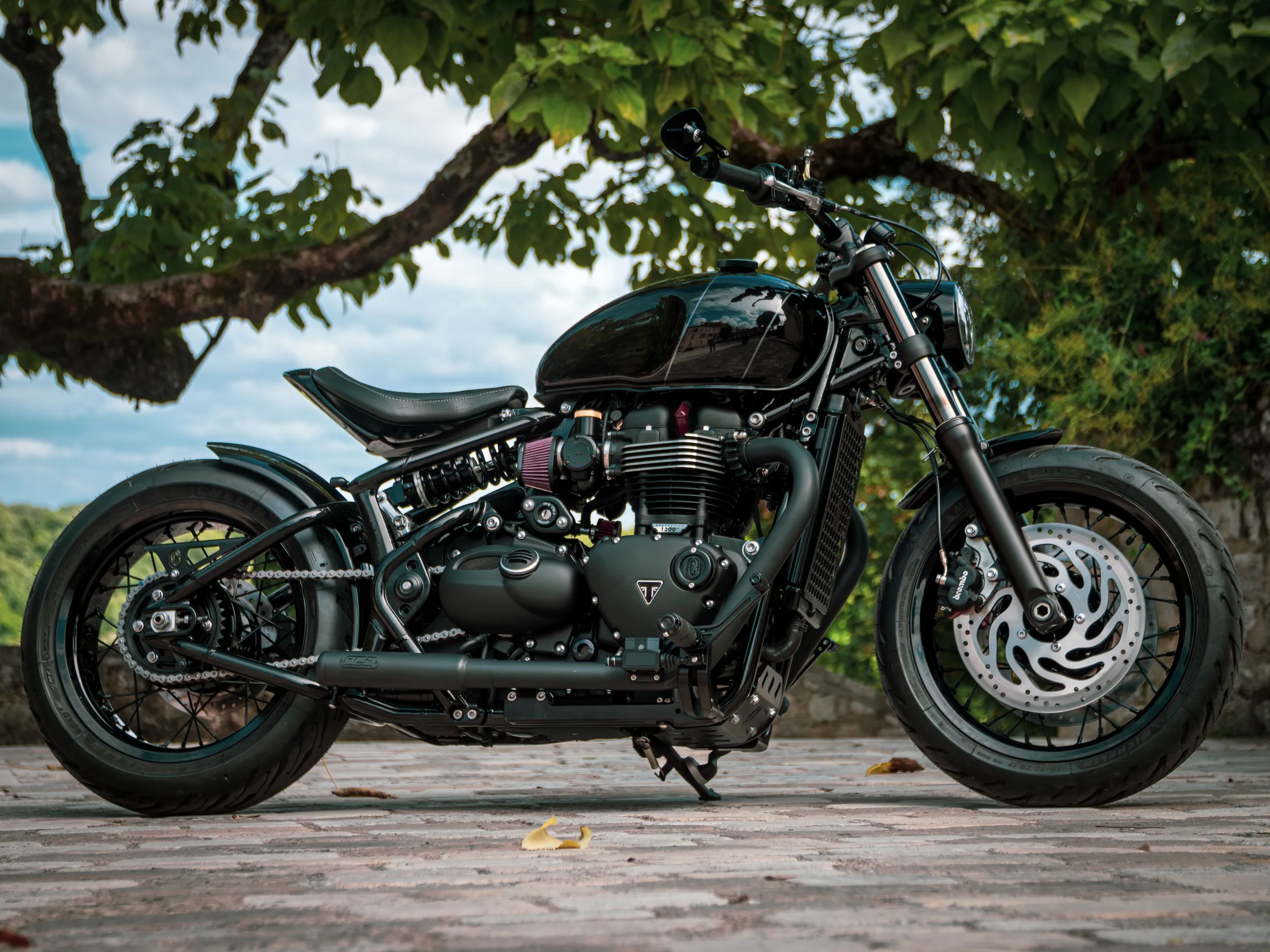
The rear: where the soul of the Bobber is revealed
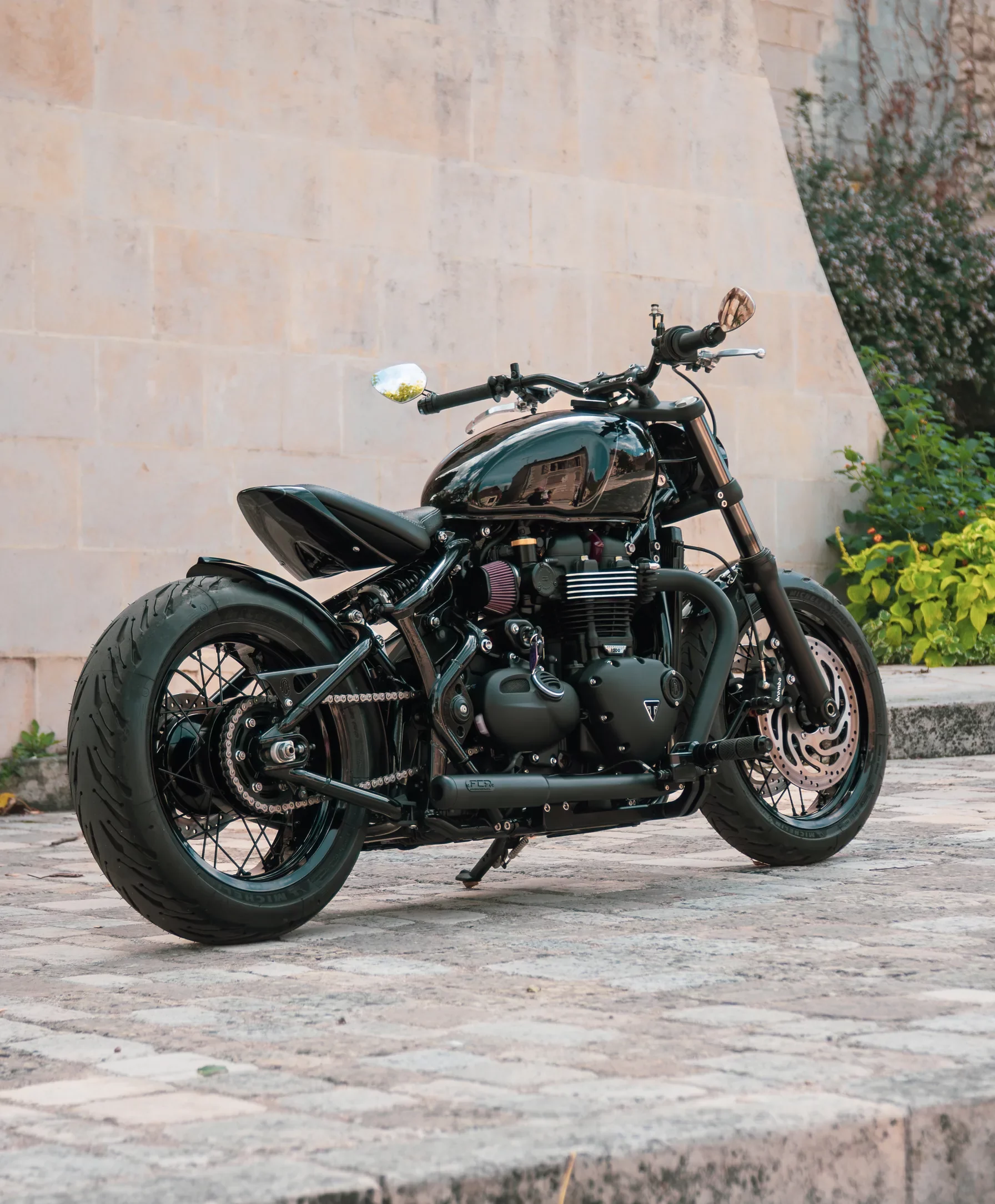
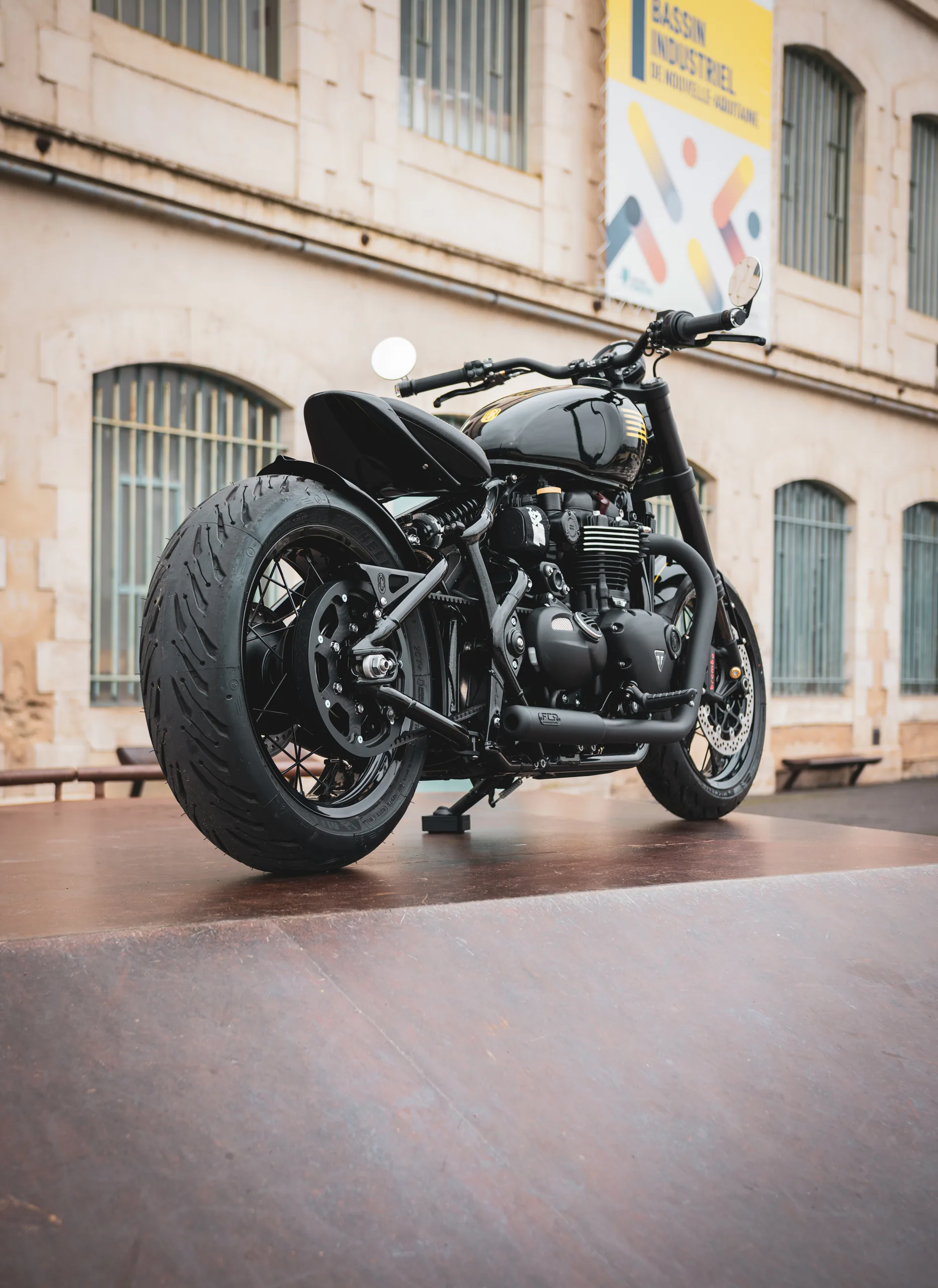
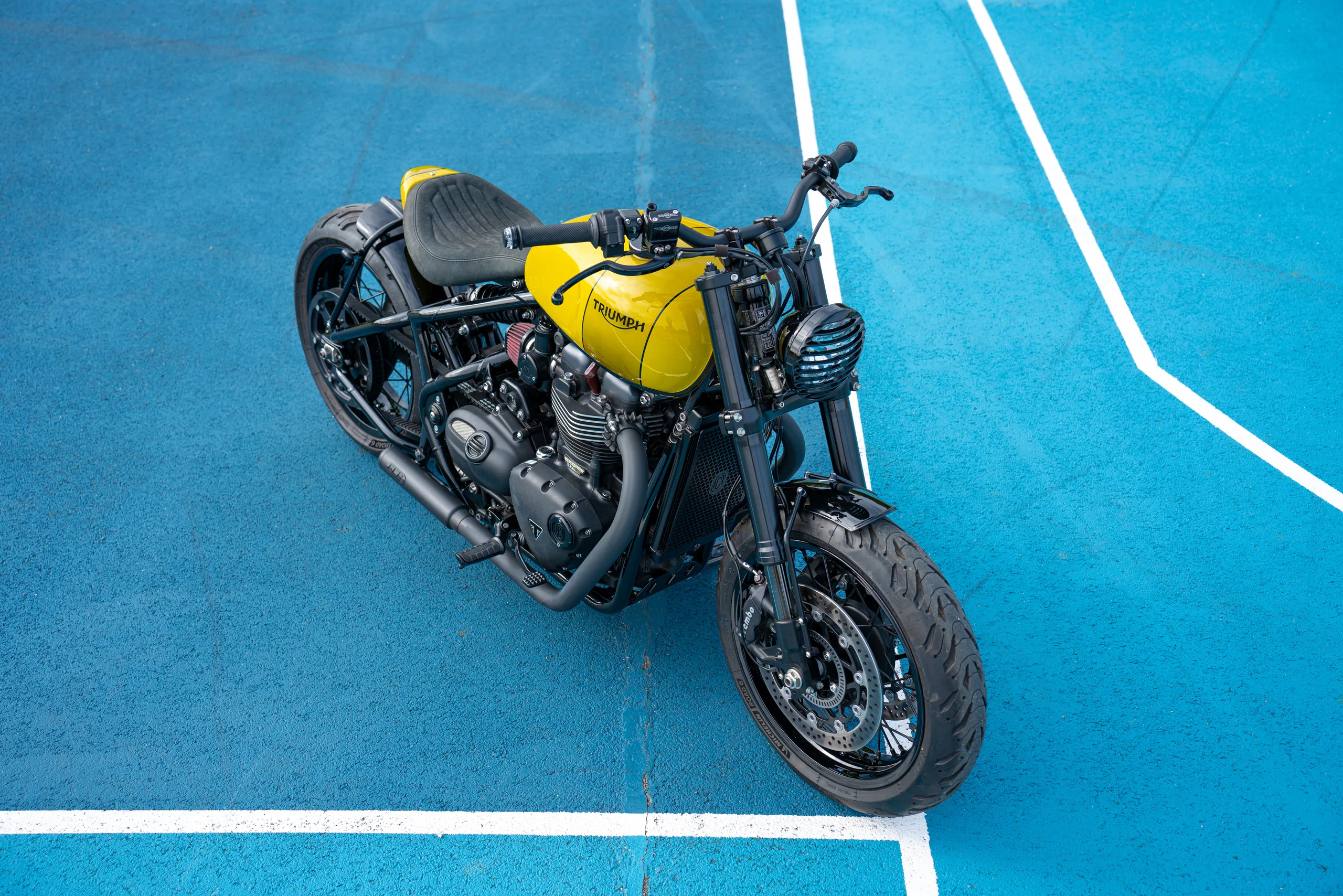
The rear is often the most expressive part of an FCR Original Bobber, and the one we take the greatest care over. The tail section, shaped to measure in our workshop, extends the suede leather seat and gives the motorcycle a modern fluidity. The fender is cut, fitted and repositioned with precision.
We want a rear that is taut, clean, geometric and alive.
A perfect balance between style and function.
It is often there, from a rear three-quarter view, that the soul of a Bobber truly reveals itself.
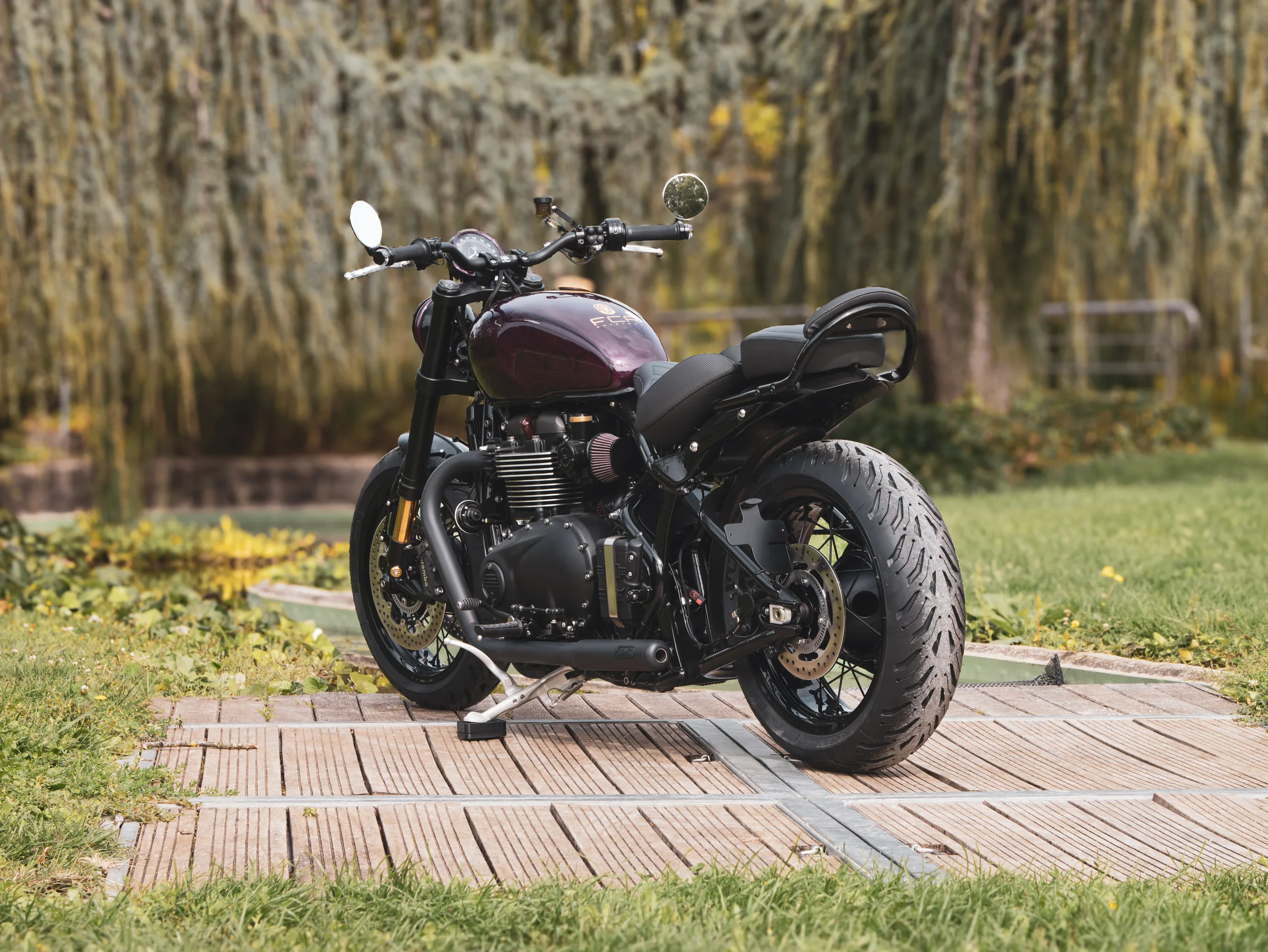
The sound: giving a voice to the Bonneville 1200
Sound is a signature in its own right. When the engine wakes up, the motorcycle must convey emotion before it has even moved a metre. We have developed an FCR Original exhaust system designed specifically for the Triumph Bonneville 1200 Bobber. The result: a deep, throaty and powerful sound, but never aggressive.
It is not about making noise.
It is about giving the machine a voice. A voice that tells a story.
This exhaust is also available on its own from FCR Accessoires: the Triumph Bobber 1200 exhaust system, in brushed or black finish, supplied with a removable DB killer.
Quality, everywhere
Un Bobber cohérent est un Bobber où chaque détail compte. Nous portons une exigence A coherent Bobber is a Bobber where every detail counts. We bring uncompromising standards to the choice of paints, anodising, machined parts, reworked controls, hidden fixings and integrated wiring. We are not looking for superficial beauty, visible only in a photo, but for sincere beauty, perceptible from every angle.
In practice, our Bobbers are fitted with components chosen for their quality:
- Brakes and controls: Brembo calipers and Beringer master cylinders.
- Rear suspension: Shock Factory 2Win shock absorber.
- Instruments and lighting: Motogadget Tiny speedometer, Motogadget M.Blaze indicators, FCR Original 3-in-1 Mini Bates rear lights.
- Machined details: billet fuel cap, radiator grille, engine guard and side-mounted licence plate holder by FCR Original.
An FCR Original Bobber is as much a machine as a piece of craftsmanship.
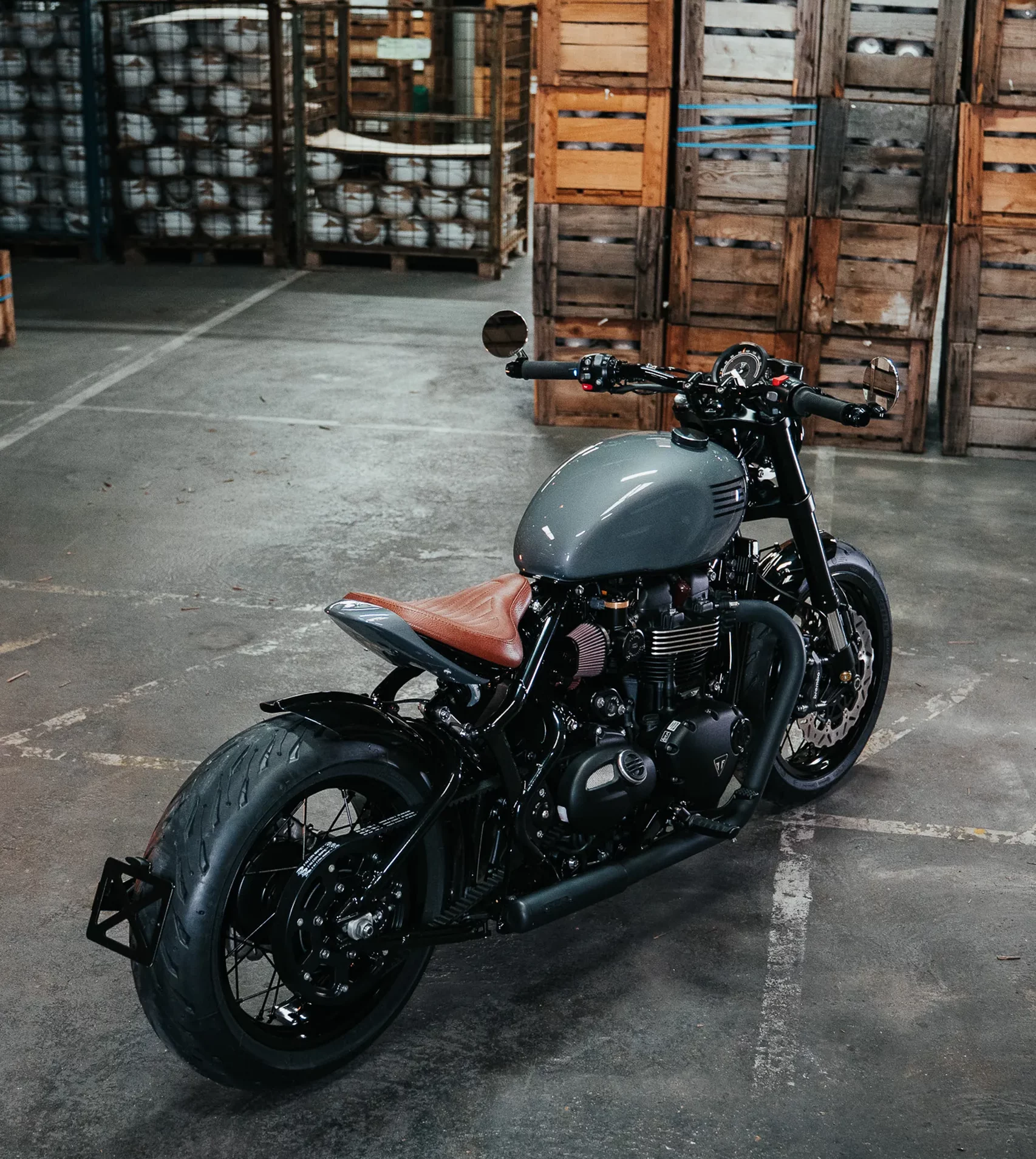
No two Bobbers are the same
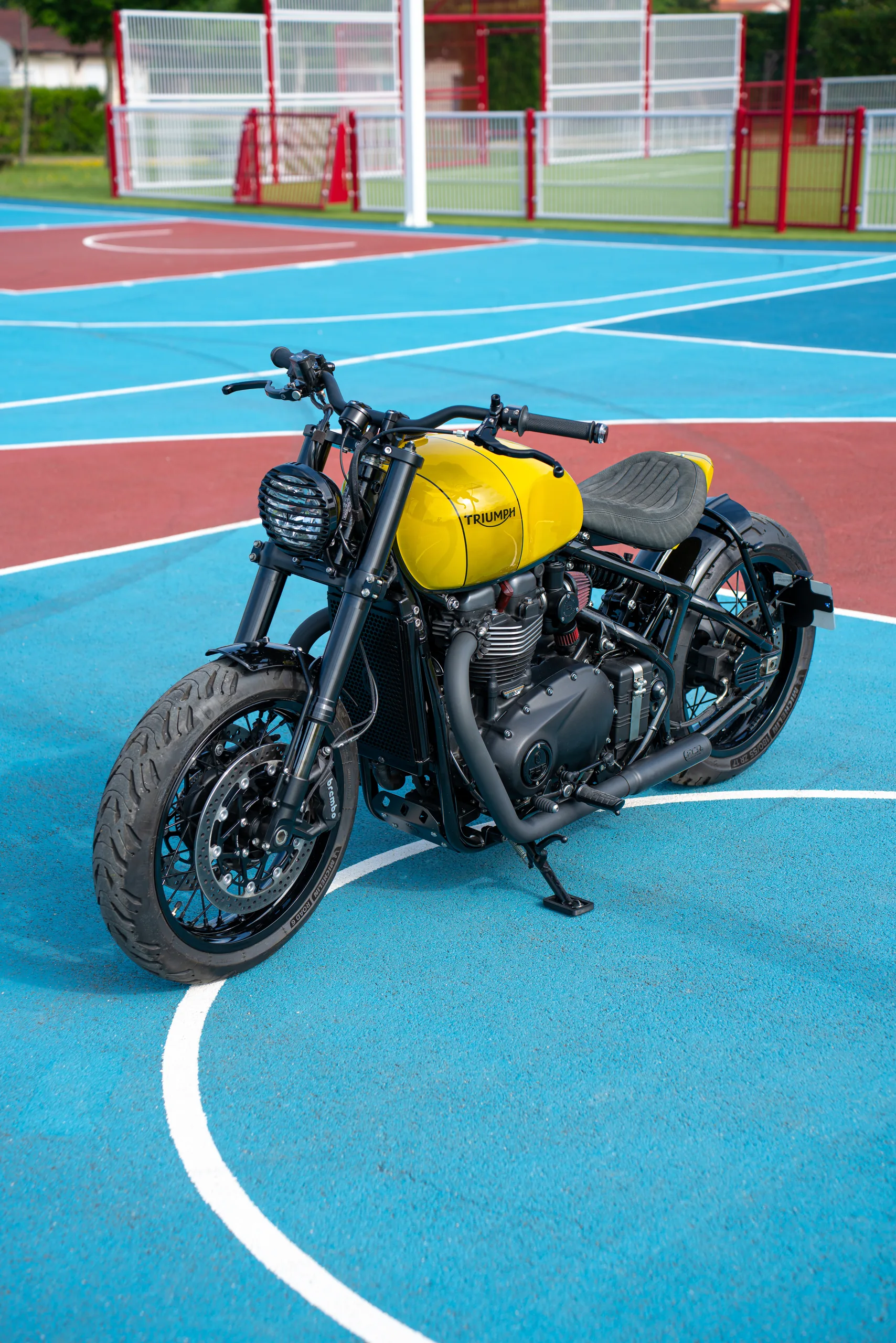
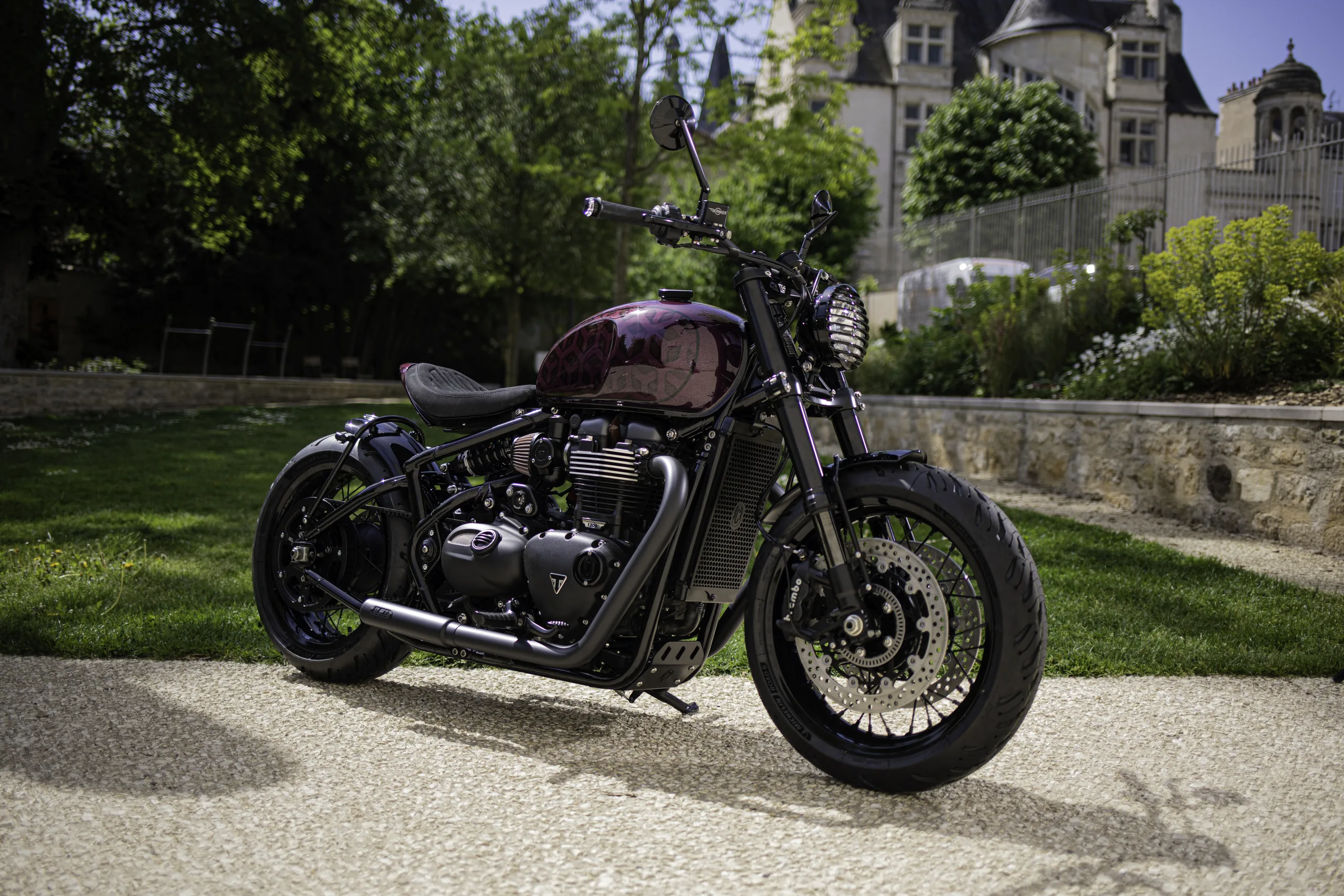
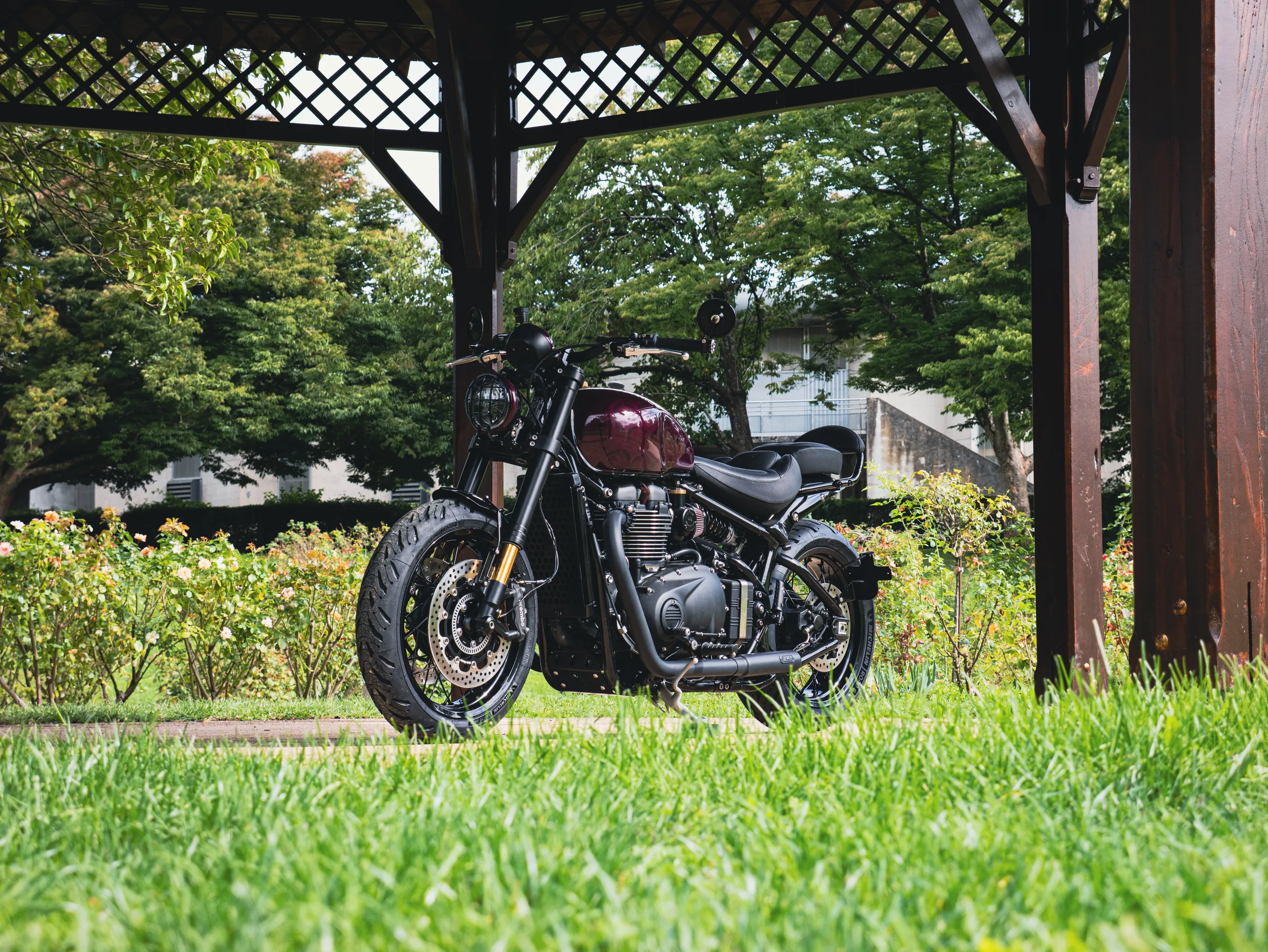
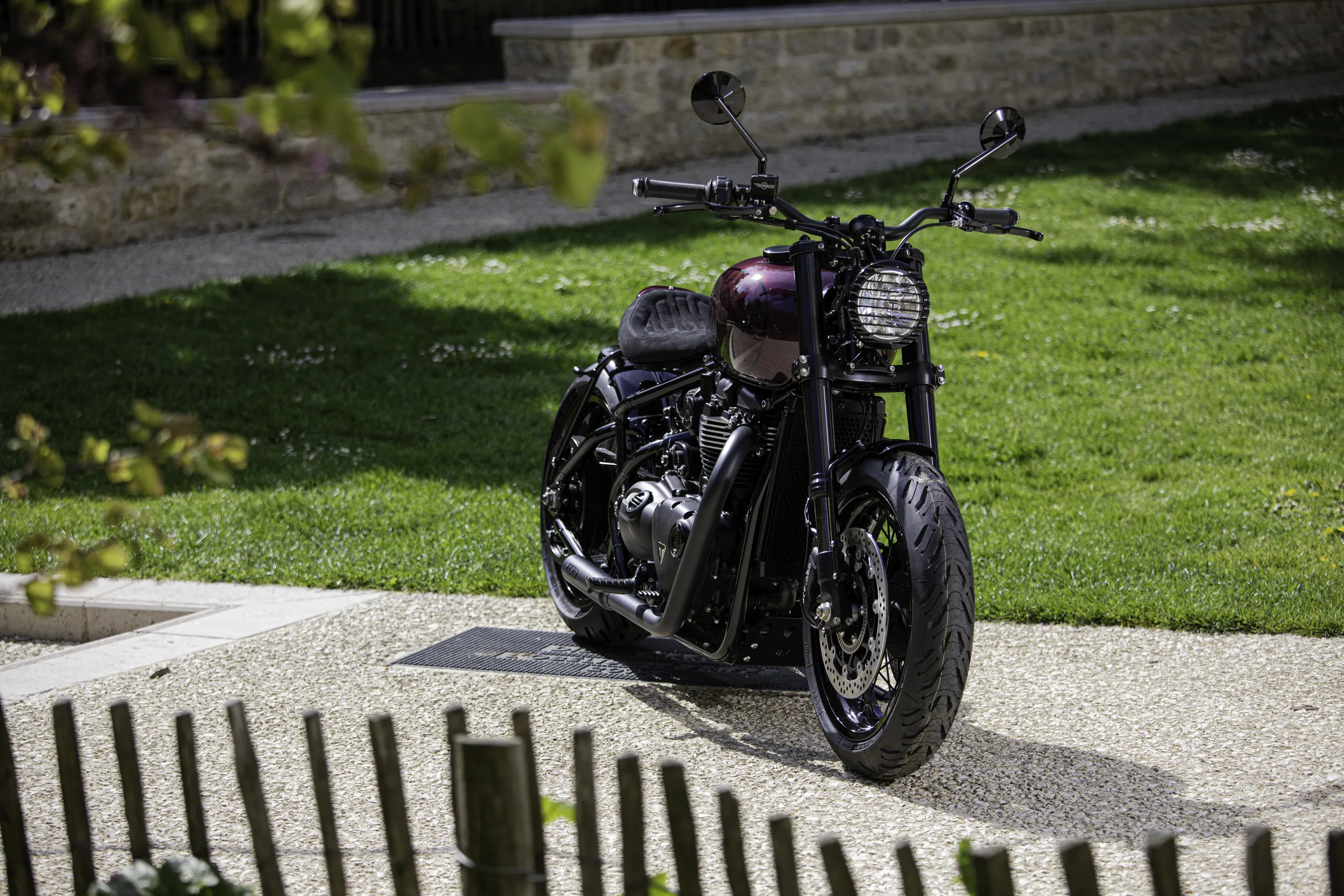
At FCR Original, the rule is simple: one motorcycle, one rider. No Bobber looks like the one before, because each is shaped around a personal story. The Triumph Bonneville 1200 Bobber lends itself to every interpretation: understated, elegant, aggressive or radical. Colours, materials, finishes and proportions are chosen with the rider, to create a unique piece.
Here are a few of the Bobber interpretations that have left our workshop.
 1 / 6
 2 / 6
 3 / 6
 4 / 6
 5 / 6
 6 / 6
To see how far a build on this base can go, discover the Triumph Bobber 1200 we built for Tom Fletcher, musician and member of the band McFly.
Why choose an FCR Original Bobber?
Choosing a Bobber means choosing what you want to express. It means giving your motorcycle a personality, a meaning, an intention. An FCR Original Bobber is:
- A strong identity, born from the meeting of American attitude and British elegance.
- French craftsmanship, driven by precision and passion, in our Chauvigny workshop since 2012.
- A balanced machine, low, compact and charismatic.
- An authentic riding experience, made of raw, genuine sensations.
- A one-off piece, because no project resembles the one before.
Upgrade your Triumph Bobber with FCR Accessoires
Already own a Triumph Bobber and want to upgrade it step by step? The parts developed for our builds are available from FCR Accessoires. Designed in our workshop and tested on our own Bobbers, they are plug and play, with no irreversible modification.
Among the essentials: the Triumph Bobber rear seat cowl, the sump guard, the extended radiator grille, the chain guard or the stainless headlight grille.
Find the full range in the Triumph Bonneville Bobber accessories collection.
To go further, our complete guide to the Triumph Bobber details its specifications and customisation options, and our article on the DNA of the Triumph Bobber helps you choose the parts that will bring out its character.
The Bobber: our heritage, your expression
The Bobber was born in American garages. Today it lives on in workshops like ours, where passion, design and craftsmanship come together to give it a new dimension.
At FCR Original, we do more than transform motorcycles. We shape mechanical identities. We give a machine a soul. We tell your story.
If you dream of a Bobber that is elegant, spirited, timeless, a Bobber that looks like you, then welcome to FCR Original.
Frequently asked questions
Everything about the Bobber
01 Where does the name Bobber come from?
The name comes from the American term “bob-job”. In the 1930s, riders cut down the rear fender of their motorcycle, the way you would bob a horse’s tail: the fender was said to be “bobbed”.
The term “bob-job” remained in use until the late 1990s, before being shortened to “bobber”.
02 When was the Bobber style born?
The Bobber appeared in the United States in the 1930s. It was inspired by the stripped-down racing machines of Class C, created in 1933 by the American Motorcyclist Association.
The style really took off after the Second World War, when a generation of riders started customising their motorcycles.
03 What is the difference between a Bobber and a Chopper?
A Bobber takes away: it lightens a stock motorcycle while keeping its original frame and geometry. A Chopper transforms: its frame is cut and re-welded, its fork extended and its silhouette stretched.
The Chopper was in fact born from the most extreme bob-jobs of the 1950s and 1960s. Where it stretches the lines, the Bobber condenses them.
04 Why is the Triumph Bonneville 1200 Bobber a good base for a custom build?
It combines a strong identity, reliable mechanics and rare potential for transformation. Its hidden rear shock recreates the look of a vintage hardtail frame, and its 1,200 cc High Torque twin delivers 77 hp and 106 Nm of torque.
Its already clean lines make every modification immediately visible, which makes it an ideal base for creating a one-off machine.
05 What makes an FCR Original Bobber different?
A blend of the attitude of American Bobbers and the finesse of Triumph’s British lines, with a compact, low and taut silhouette.
An inverted fork on custom triple clamps, 17-inch wheels, a tail section designed in our workshop, a suede leather seat and an FCR Original exhaust make up our signature. Every project remains unique: one motorcycle, one rider.
06 Can an FCR Original Bobber be adapted to the rider’s build?
Yes. We take the rider’s height, weight and intended use into account from the very start of the project.
Seat height and riding position are adjusted accordingly, for a motorcycle that feels as right to ride as it looks.
07 Can I customise my Triumph Bobber without a full build?
Yes. Parts developed for our builds are available from FCR Accessoires: exhaust system, seat cowl, engine guard, radiator grille, chain guard or headlight grille.
They are plug and play, with no irreversible modification, so you can upgrade your Bobber step by step.
Ready to write the story of your own Bobber?
Photo and video credits: FCR Original